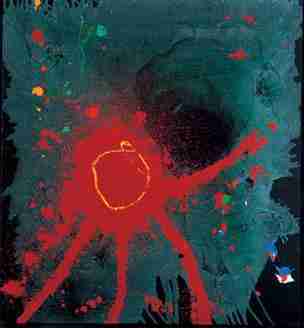
Lyrical Abstraction

Lyrical Abstraction describes an expressive approach to abstract art in which colour, gesture, rhythm, and emotional immediacy take precedence over rigid geometric structure. The term was first associated with post-war European painting, particularly the French movement known as Abstraction Lyrique, and was later adopted in the United States to identify a renewed form of intuitive, sensuous abstraction.

Rather than following a single style, Lyrical Abstraction encompasses paintings characterised by fluid compositions, spontaneous marks, atmospheric colour, and an emphasis on the physical act of painting.

In the United States, the term gained particular relevance during the late 1960s and 1970s, when painters began moving away from the intellectual severity of Minimalism and the impersonal imagery of Pop Art.

Lyrical Abstraction ultimately represents a broad artistic sensibility rather than a fixed programme. It brings together works in which abstraction becomes a vehicle for sensation, movement, memory, and personal experience. Through its balance of spontaneity and formal awareness, it established an important bridge between Abstract Expressionism, post-painterly experimentation, and later developments in contemporary abstract painting.