

Art Trends 2027: What Will Emerge, What Will Survive, and What Is Dying
THE YEAR OF CONSEQUENCES
From post-AI authorship and material intelligence to public space, market correction, and a new geography of collecting, 2027 will reveal which forms of visibility still produce cultural value.
The art world likes to announce a revolution every season. Usually, the revolution arrives with a sponsor, a press release, and a dinner reservation. The more useful question for 2027 is not which style will suddenly become fashionable. It is which practices can survive after the fashion has passed, which institutions can still produce trust, and which markets can distinguish cultural value from accelerated visibility.
That distinction matters because the signals are contradictory. The global art market returned to modest growth in 2026, reaching an estimated $59.6 billion, yet the recovery was uneven and remained below the 2022 peak. At the same time, generative AI moved from novelty to infrastructure, political pressure entered museums more openly, and the costs of fairs, transport, insurance, energy, and production continued to rise. The system is not collapsing. It is becoming more selective, more divided, and less forgiving of work whose only argument is that it photographs well.
In 2027, documenta 16 and Skulptur Projekte Münster will take place almost simultaneously in Germany. Sharjah Biennial 17 will confirm that the Gulf is no longer a peripheral stop on a Western itinerary. These events will not produce a single visual language. They will, however, sharpen a common demand: art must explain what it does in the world, not merely what it claims to represent.
The Short Verdict
- Most important artistic shift: post-AI art will move beyond spectacular generated images toward authorship, labour, disclosure, and conservation.
- Practice with the strongest institutional momentum: material, ecological, archival, and site-responsive work.
- Best market for liquidity: the United States.
- Most convincing mature-market momentum: France, especially Paris.
- Most important expansion story: the Gulf, particularly for Arab modernism and MENA contemporary art.
- Greatest speculative danger: auction-led ultra-contemporary names, generic AI production, and the remains of NFT hype.
Art in 2027 at a Glance
| Emerging | Consolidating | Mutating | Losing authority |
|---|---|---|---|
| Post-AI authorship and model transparency | Material research, textiles, ceramics, and assemblage | Digital art beyond token speculation | Generic prompt aesthetics |
| Climate adaptation and maintenance as artistic method | Counter-archives and research-based practice | Immersive art becoming slower and more embodied | Projection spectacle designed for social media |
| Public art as civic and social infrastructure | Performance, sound, and time-based media | Painting as a hybrid material and historical field | Market-ready zombie figuration |
| Conservation-first digital collecting | Global South institutions as agenda setters | Collective curating with clearer accountability | Identity or ethics used as a substitute for form |
| Small-scale, attention-intensive exhibitions | Rediscovery of overlooked postwar and modern artists | Art fairs becoming fewer, more regional, and more strategic | Fast flipping and the fantasy of guaranteed returns |
The Artistic Trends That Will Define 2027
1. Post-AI art will replace “AI art”
By 2027, calling a work “AI art” will say as little as calling a photograph “camera art.” Artificial intelligence will remain important, but its visible effects will matter less than the systems behind it. The strongest artists will ask which datasets were used, whose labour was hidden, how an image can be traced, what a model excludes, and who remains legally or morally responsible for the result.
This change will be reinforced by regulation. The European Union’s transparency requirements for generative systems began applying in August 2026, including machine-readable marking for certain synthetic content. Art is not reducible to compliance, but the cultural atmosphere has changed. Authorship, disclosure, provenance, and the right to reuse images will become part of the artwork’s material condition.
The practice to watch is therefore not prompt virtuosity. It is the deliberate combination of computation, human editing, archival research, physical production, and transparent decision-making. Artists such as Hito Steyerl, Pierre Huyghe, Cao Fei, Danielle Brathwaite-Shirley, and Anna Ridler offer very different models for understanding digital systems as political, ecological, and imaginative environments. The decorative infinity of machine-generated images will not disappear. It will simply become harder to mistake for an artistic position.

Explore this direction:
2. Material intelligence will outlast the craft boom
Textiles, ceramics, wood, metal, earth, and reused industrial materials will remain central, but the easy slogan of a “return to craft” is wearing thin. Handmade surfaces do not automatically carry ethical depth. A woven object can be as empty as a screen, and a ceramic vessel can be manufactured by the same speculative logic as any fashionable canvas.
The important work will connect material to history: extraction, trade, migration, gendered labour, regional knowledge, or ecological damage. Otobong Nkanga, El Anatsui, Ibrahim Mahama, Sonia Gomes, Kapwani Kiwanga, and Tuli Mekondjo matter because material is not an aesthetic costume in their work. It is evidence. In 2027, the distinction between material intelligence and decorative authenticity will become one of the most useful critical tests.

3. Climate art will move from warning to adaptation
The image of the climate emergency is no longer difficult to find. The difficulty is making an artwork that does more than illustrate a catastrophe already visible every week. A new generation of ecological practice will focus on maintenance, water, heat, soil, repair, toxicity, food systems, and the afterlife of exhibition materials. The artist will increasingly operate as a researcher, cultivator, organizer, or designer of protocols rather than as a producer of apocalyptic scenery.
Iza Tarasewicz’s announced project for Skulptur Projekte Münster 2027, situated in a working and residential agricultural community, is indicative. Seasonal cycles and relations among people, animals, and land are not treated as a green backdrop. They become the structure of the work. The phrase “sustainable exhibition” will survive, but institutions will be judged more severely on transport, reuse, production, and local continuity. Green language without measurable practice is approaching its sell-by date.

Explore ecological practices:
4. Public art will become a test of civic relevance
Skulptur Projekte Münster returns in 2027 for its sixth edition and fiftieth anniversary. Its announced focus extends beyond the city centre to neighbourhoods undergoing social and architectural transformation. That shift will help move public art away from the familiar model of placing a large object in an available square and calling the result dialogue.
Public art will increasingly involve access, memory, contested land, communal use, and long-term maintenance. Hew Locke’s engagement with colonial power, Selma Selman’s use of discarded materials and histories of labour, Róza El-Hassan’s work on migration and mutual support, and Oscar Murillo’s planned focus on communal eating suggest how sculpture can operate through relations as well as objects. The best projects will leave behind more than documentation. The weakest will continue to confuse scale with public meaning.
5. The archive will become a battlefield, not a storehouse
Counter-archives, oral histories, family records, legal documents, and vernacular images will remain crucial. Yet the critical emphasis is changing. It is no longer enough to retrieve a neglected story and place it under glass. Artists will have to confront how evidence is produced, who is allowed to speak, what can safely be shown, and how images of violence circulate through platforms and institutions.
Forensic Architecture, Lawrence Abu Hamdan, Gala Porras-Kim, Dala Nasser, and Basel Abbas and Ruanne Abou-Rahme demonstrate different ways of treating documents as unstable political material. In 2027, research-based practice will be strongest when the research alters form. A bibliography is not an alibi, and an artist statement is not a substitute for an artwork.
6. Immersion will become quieter or become irrelevant
The large projection room will not vanish. It is too useful to museums, developers, and ticketing departments. But its claim to innovation is exhausted. Endless digital flowers, cosmic reflections, and enveloping landscapes now belong to the entertainment economy as much as to contemporary art.
The next phase of immersion will be smaller, slower, and less obedient to the camera. Sound, darkness, tactility, scent, live presence, spatial discomfort, and accessibility will become more significant. Jessica Ekomane, Pan Daijing, Mire Lee, and Sin Wai Kin are useful reference points because they construct conditions of attention rather than simply surrounding visitors with expensive pixels.
7. Painting will survive the death of another “return to painting”
Painting is not dying, and it does not need another resurrection. It remains commercially dominant because it is portable, legible, and compatible with domestic space. The more interesting question is which paintings can resist being reduced to a thumbnail and a price.
In 2027, painting will remain powerful where it carries historical friction, material experiment, or a complicated relation to the image. Lynette Yiadom-Boakye, Michael Armitage, Mohammed Sami, Jadé Fadojutimi, Christina Quarles, and Firelei Báez have distinct practices that cannot be collapsed into one market category. What is losing energy is the formula of polished surreal figuration produced for immediate recognition, especially when a thin psychological atmosphere disguises interchangeable composition. The market may continue to sell it. Criticism does not have to continue believing it.
8. Digital art will separate from NFT nostalgia
Digital art is not dead. The speculative story that once treated the token as the artwork has lost authority. According to the Art Basel and UBS Survey of Global Collecting 2026, 51% of the high-net-worth collectors surveyed had bought digital art, while Gen Z showed the highest participation in digital, film, and video work. This is evidence of a medium becoming normal, not of a return to the 2021 frenzy.
The investable and institutionally durable part of this field will depend on clear editioning, source files, display specifications, migration plans, certificates, artist support, and conservation. Code-based, generative, moving-image, and networked works can have lasting value. A token with a roadmap and a Discord community is not the same thing.
New Practices to Watch
The most consequential new practices of 2027 will not necessarily look new. Their novelty lies in how they reorganize authorship, labour, duration, and responsibility.
- Model disclosure as artistic form: artists reveal training sources, edits, exclusions, and human interventions rather than presenting AI as a magic trick.
- Conservation-first digital production: preservation plans, open formats, replacement protocols, and emulation become part of the work from the beginning.
- Maintenance art for the climate era: repair, cultivation, cleaning, reuse, and stewardship replace the heroic fantasy of producing one more monumental object.
- Spatial research: artists work with neighbourhood histories, housing, borders, public services, and informal infrastructures instead of treating location as scenery.
- Counter-forensic aesthetics: images, sound, satellite data, testimony, and digital traces are assembled to question official narratives and the politics of proof.
- Collective protocols: collaboration is defined through ownership, payment, credit, and decision-making, not through the romantic use of “we.”
- Low-energy exhibition design: fewer shipments, adaptable architecture, local fabrication, and longer display cycles influence curatorial form.
- Attention-based work: intimate scale, silence, reading, listening, and duration become resistance to the speed of the feed.
The Artists Who Will Frame the Conversation
The following names are not a ranking, and they do not all occupy the same market position. Some are firmly established. Their importance lies in providing the intellectual and formal reference points against which younger practices will be measured.
| Artist or practice | Why they matter for 2027 |
|---|---|
| Hito Steyerl | Images as systems of power, circulation, labour, and technological ideology. |
| Otobong Nkanga | Material extraction, ecology, exchange, and the social life of resources. |
| Ibrahim Mahama | Labour, architecture, discarded materials, and institution-building beyond Western centres. |
| Kapwani Kiwanga | Research translated into colour, space, surveillance, and colonial histories. |
| Simone Leigh | Monumentality, Black feminist histories, craft, architecture, and public visibility. |
| Doris Salcedo | Political memory embodied through restrained material and spatial decisions. |
| Tania Bruguera | Political performance tested as civic action rather than symbolic dissent. |
| Forensic Architecture | The contested relationship between aesthetics, evidence, human rights, and institutions. |
| Cao Fei | Virtual life, urban transformation, labour, and the social imagination of technology. |
| Pierre Huyghe | Living systems, nonhuman agency, machine intelligence, and unstable environments. |
| Cecilia Vicuña | Poetry, ecology, Indigenous knowledge, fragility, and political memory without separation. |
| El Anatsui | Material transformation, collective labour, postcolonial history, and sculptural scale. |

Emerging and Rising Artists to Keep on Your Radar
“Emerging” is an imprecise label. Several artists below already have museum exhibitions, biennial participation, or serious gallery representation. They are included because their influence and markets still have room to develop, not because they appeared yesterday. That difference is essential for collectors: sudden novelty is usually more expensive than sustained development.
| Artist | Practice to watch | Risk and opportunity |
|---|---|---|
| Selma Selman | Performance, scrap metal, Roma identity, labour, and collective emancipation. | Strong institutional relevance; avoid reducing the work to identity alone. |
| Iza Tarasewicz | Sculptural systems shaped by agriculture, matter, movement, and ecological cycles. | Growing curatorial visibility with material depth. |
| Jessica Ekomane | Sound installations that reorganize space, rhythm, and perception. | Institutionally persuasive; a specialist market requiring technical care. |
| Neda Saeedi | Installations linking landscape, displacement, resource politics, and memory. | Strong fit with ecological and post-migration discourse. |
| Tekla Aslanishvili | Moving image and research on logistics, infrastructure, borders, and technological power. | High critical potential; lower liquidity than painting. |
| Danielle Brathwaite-Shirley | Interactive digital environments centred on Black trans histories and participation. | Important post-AI reference; conservation and edition terms are decisive. |
| Dala Nasser | Land, architecture, rubbings, fabric, and the physical residue of political history. | Strong institutional trajectory and materially distinctive work. |
| Nolan Oswald Dennis | Diagram, geology, space, and anti-colonial systems of knowledge. | Conceptually ambitious with expanding international attention. |
| Dominique White | Sculpture, maritime histories, fugitivity, and the afterlives of slavery. | Already rising quickly; price discipline is necessary. |
| Rebeca Carapiá | Metal, bodily gesture, Afro-Brazilian knowledge, and sculptural language. | Compelling material practice within growing attention to Brazil. |
| Sin Wai Kin | Performance, moving image, speculative identities, and theatrical world-building. | Strong museum relevance; evaluate editions and production history. |
| Jean Katambayi Mukendi | Drawing, electricity, engineering, scarcity, and improvised technological systems. | Distinctive position outside generic digital aesthetics. |
| Tuli Mekondjo | Performance, textiles, colonial archives, land, and Namibian histories. | Institutional attention is deepening; scholarship will matter. |
| Sandra Poulson | Everyday objects, urban memory, and the political materiality of Luanda. | Early international development with meaningful curatorial context. |
| Solveig Qu Suess | Film, infrastructure, ecology, and transnational technological networks. | Relevant to the move from digital images toward digital systems. |
These artists should be followed through exhibitions, commissions, publications, and the consistency of new work. An auction result is evidence of demand, not proof of importance. Conversely, a museum exhibition is evidence of institutional attention, not a guarantee of financial performance.
The Curatorial Visions of 2027
From exhibition themes to exhibition infrastructure
The curatorial question will shift from “What is the theme?” to “How is this exhibition built, governed, paid for, and remembered?” Shipping, accessibility, mediation, censorship, artist fees, security, reuse, and local relationships are no longer backstage matters. They shape the meaning of the exhibition itself.
Documenta 16, directed by Naomi Beckwith with Carla Acevedo-Yates, Romi Crawford, Mayra A. Rodríguez Castro, and Xiaoyu Weng, will be watched as a test of institutional reconstruction after documenta’s recent crises. The unusually substantial investment in mediation announced for the edition suggests that interpretation and public encounter will not be treated as an appendix to the artworks. This may become one of the year’s most influential curatorial ideas: audiences are not traffic, and education is not the room where difficult art is made harmless.
The Global South will set agendas rather than supply representation
Sharjah Biennial 17, curated by Angela Harutyunyan and Paula Nascimento, brings together more than one hundred participants through two connected approaches. One examines the afterlives of socialist modernity and anti-colonial struggle. The other uses infrastructure as a method for thinking about space, memory, and cultural silencing. This is not a decorative survey of geographic diversity. It is a proposition about how history remains active in institutions, buildings, and forms of knowledge.
The broader shift is clear. Sharjah, Doha, Abu Dhabi, Dakar, Lagos, Cape Town, São Paulo, and other centres are no longer waiting for validation from London or New York before producing intellectual authority. Western institutions will continue to borrow artists and vocabularies from these contexts. The more difficult question is whether they will also redistribute budgets, decision-making, and historical credit.
Public space will return as conflict, not decoration
With Münster and documenta opening within days of each other, public space will become one of 2027’s dominant curatorial laboratories. Housing, migration, urban redevelopment, disability, labour, policing, and historical monuments will enter the exhibition not as themes imported into neutral venues, but as conditions already present at the site.
This will also expose the limits of site specificity. A temporary commission cannot repair structural inequality, and community participation can easily become unpaid symbolic labour. The better curators will state those limits. The worse ones will photograph a workshop and declare social transformation complete.
Collective curating will demand individual accountability
Curatorial collectives will remain influential, including WHW at Münster. Yet the collective will no longer function automatically as proof of horizontal politics. Institutions, artists, and audiences will ask who made each decision, how disagreement was managed, who received credit, and who absorbed the risk. The word “collective” will survive. Its use as ethical perfume is fading.
The blockbuster will divide into spectacle and attention
Large museums will continue to need high visitor numbers. Blockbusters will not die. They will separate into two models: highly commercial experience-led exhibitions and smaller research-rich exhibitions designed for slower attention. The interesting institutions will stop pretending these models are identical. A ticketed spectacle may be culturally effective, but attendance alone cannot measure critical value.
The Critical Questions That Will Matter
Representation is no longer enough
The last decade expanded who could enter the museum, the biennial, and the market. That achievement is real, but visibility has too often been treated as the final objective. In 2027, criticism will ask what representation changes after the opening: acquisitions, staffing, governance, interpretation, payment, and the distribution of institutional power.
An artwork about injustice is not necessarily a just artwork, and an exhibition devoted to excluded communities can reproduce exclusion in its contracts and working conditions. The strongest criticism will reconnect subject matter to form and institutional consequence. Political urgency deserves formal intelligence, not exemption from judgment.
Specific language will become a form of resistance
Automated writing has intensified a problem the art world already had: sentences that sound important because they avoid saying anything verifiable. Terms such as care, liminality, embodiment, decoloniality, ecology, and resistance will not disappear, nor should they. But criticism will increasingly test how precisely they describe the work in front of us.
The most credible writers will name materials, decisions, contradictions, precedents, and failures. Press-release criticism, in which interpretation merely rearranges the curator’s vocabulary, is losing authority. The return of the artist-writer, the independent newsletter, the small journal, and the long-form essay will not restore a lost golden age. It may, however, create pockets of intellectual independence outside the collapsing economics of cultural media.
The ethics of images will become inseparable from their politics
War, forced migration, surveillance, and state violence have produced an enormous field of images. Critics and curators will need to ask whether showing an image produces evidence, solidarity, exposure, repetition, or harm. The right to visibility can conflict with the right not to be turned into content.
This question will be especially urgent when machine-generated images, documentary fragments, and platform metadata are combined. Verification will become an aesthetic issue because trust has become a scarce cultural resource.
What Is Dying in Contemporary Art
“Dying” does not mean disappearing. Weak forms can remain profitable for years. It means losing critical authority, institutional novelty, or the power to command automatic attention.
- Generic AI image-making: visual abundance without authorship, disclosure, or a reason for choosing one image over a thousand alternatives.
- Instagram immersion: projection rooms whose main spatial achievement is eliminating the edge of the screen.
- Zombie figuration: interchangeable bodies, dreamlike props, and market-friendly unease manufactured as a recognizable product line.
- Identity as automatic value: biography used to protect weak formal decisions from criticism.
- Craft as moral shorthand: the assumption that handmade means authentic, communal, or politically progressive.
- Biennial gigantism: hundreds of artists, impossible itineraries, exhausted audiences, and little durable local infrastructure.
- The frictionless global art world: rising transport costs, tariffs, political restrictions, and regional networks are making circulation less seamless.
- The guaranteed emerging-artist flip: a fantasy damaged by rapid auction inflation and equally rapid repricing.
- NFT revival rhetoric: blockchain may remain useful, but nostalgia for speculative mania is not a cultural programme.
- Ethical branding: institutions and artists using the correct causes as protection from examining their own structures.
The Art Market in 2027: Recovery Without Innocence
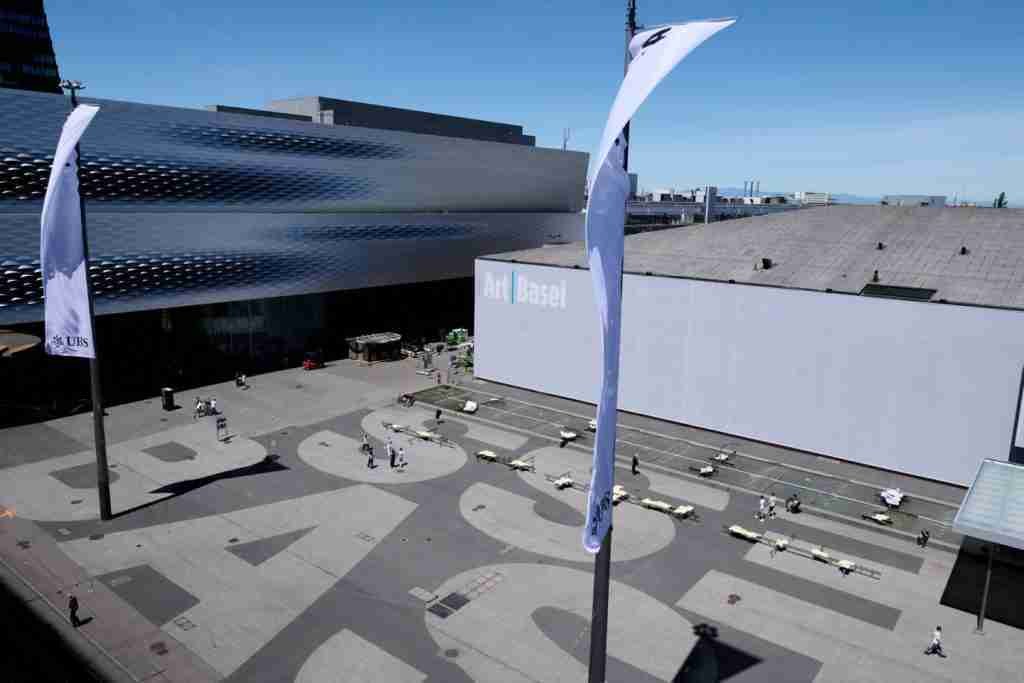
The most recent comprehensive data indicate recovery, but not a general boom. The Art Basel and UBS Global Art Market Report 2026 estimated 2026 sales at $59.6 billion, up 4%. Public auction sales increased 9%, while dealer sales rose 2%. Growth was concentrated at the top: auction sales above $10 million increased 30%, while sales below $50,000 declined in both value and volume.
This produces a divided market. Blue-chip masterpieces with strong provenance can attract global competition. At the opposite end, smaller galleries and accessible works can find new buyers. The uncomfortable middle remains under pressure from costs, limited liquidity, and collectors who would rather buy one exceptional work than three merely respectable ones.
For 2027, expect a cautious market with short bursts of confidence rather than a universal upswing. Quality, rarity, condition, and provenance will regain power. That sounds obvious, but the speculative years depended on temporarily forgetting all four.
Which Art Market Will Be Best in 2027?
| Market | 2027 outlook | Best for | Main risk |
|---|---|---|---|
| United States | Best for liquidity and high-end depth | Postwar, modern, blue-chip contemporary, major estates | Policy, tariff, and concentration risk |
| France / Paris | Best mature growth market in Europe | Modern, postwar, design, photography, international galleries | Growth may attract aggressive pricing |
| Gulf | Best structural expansion story | Arab modernism, MENA contemporary art, institutional commissions | Rapid infrastructure growth can outrun scholarship and resale depth |
| United Kingdom | Still essential, but no longer unchallenged | International auctions, established contemporary and modern art | Costs and competition from Paris |
| South Korea | Selective momentum | Postwar Korean art, contemporary Asian networks, young collectors | Fashion cycles and fair dependence |
| Japan | Long-term cultural depth | Postwar movements, photography, craft, media art | Slower short-term sales growth |
| China / Hong Kong | Large but uncertain | Canonical Chinese modern and contemporary work | Economic confidence, regulation, and volatility |
| Italy | Better for selective buying than rapid resale | Postwar research, overlooked movements, works on paper, design | Smaller domestic market and weaker liquidity |
| Africa and Latin America | High curatorial potential, uneven market depth | Artists with durable galleries, archives, museums, and regional institutions | Geographic trend buying and thin secondary markets |
If “best” means easiest to resell, the United States remains first because it accounted for 44% of global sales by value in 2026. If it means the most convincing mature growth, France is more interesting: sales rose 9% to $4.5 billion. If it means the most important new infrastructure, the Gulf has the strongest case, supported by museums, foundations, auction investment, and the arrival of Art Basel Qatar. These are three different definitions of opportunity.
Italy deserves a separate distinction. Its market declined 2% in 2026, so it is not the best candidate for quick liquidity. It may nevertheless reward collectors capable of identifying under-researched postwar work, radical design, photography, conceptual practices, and regional histories before international scholarship catches up. A weak market and a weak artwork are not the same thing.
Where to Invest in Art in 2027
Art can preserve value, produce cultural capital, and occasionally generate exceptional returns. It is also illiquid, expensive to transact, vulnerable to changes in attribution and condition, and difficult to price transparently. Anyone who needs a predictable return on a fixed date should choose another asset. The strongest art strategy begins with the possibility that the work will remain on your wall longer than expected.
1. Overlooked postwar and late-career artists with real scholarship
The most credible opportunity is often not the youngest artist at the fair. It is an artist with decades of work, museum history, an archive, and incomplete market recognition. Women artists, artists from regions previously treated as peripheral, and figures excluded from dominant postwar narratives remain important areas of reassessment.
Look for monographs, museum acquisitions, retrospectives, estate organization, and sustained representation across several years. Avoid buying solely because an auction house has invented a rediscovery narrative for one season.
2. Arab, African, Asian, and Latin American modernisms
The expansion of institutions in the Gulf and the growing authority of Global South collections will continue to support research into modernisms that were never simply regional copies of European art. Arab modernism is especially well positioned, but selectivity is essential. Strong provenance, exhibition history, archival documentation, and condition matter more than geographic identity.
The opportunity lies in artists whose work can enter a wider history of modernism without losing local specificity. The danger lies in buying a region as if it were a trend.
3. Works on paper, photographs, and editions by established artists
Millennial collectors are already particularly active in prints, photography, and works on paper. These categories offer access to mature practices at lower prices than major paintings or sculptures. They can also contain experimental ideas that never appear in an artist’s most commercial work.
Check edition size, print date, signatures, publisher, condition, storage, and whether the work is lifetime or posthumous. “Affordable” is not a synonym for “liquid,” and a large edition can remain large even when the artist is famous.
4. Primary-market artists supported by serious small and mid-size galleries
The primary market can offer the most meaningful relationship between collector, artist, and gallery. It also requires patience. Choose galleries that produce exhibitions and publications, place work in institutions, communicate prices clearly, and remain committed when an artist is not the week’s favourite discovery.
A sensible horizon is seven to ten years. Frequent flipping damages the artist’s market and can close future access. The goal is not to guess which name will triple fastest, but to recognize which practice has enough formal and intellectual range to develop through several bodies of work.
5. Digital and time-based works with a conservation contract
Digital art has genuine growth potential, especially among younger collectors, but only when ownership and preservation are intelligible. Ask what files are delivered, which hardware is replaceable, whether the artist authorizes migration, how many editions and proofs exist, who stores the master, and what happens if a platform disappears.
Conservation is not an administrative detail added after purchase. In digital art, it is part of value. Works with weak documentation should be priced as technical risks, regardless of how futuristic they look.
6. Artists working between material practice and technological systems
A promising area lies between physical and digital production: sculpture informed by data, coded images with clear material outcomes, ecological installations using sensors, films built from archives and machine vision, or textiles linked to computational systems. These works can attract institutions without depending on the speculative identity of a single technology.
The key is whether technology changes the artistic question. If it only changes the surface, the work will age as quickly as the software demo that inspired it.
7. Estates with archives, catalogues raisonnés, and controlled supply
A well-managed estate can stabilize attribution, support exhibitions, publish research, and create long-term institutional visibility. It can also flood the market or manufacture scarcity. Study who manages the estate, how authentications are handled, whether scholarship is independent, and how often comparable works appear at auction.
A practical investment filter
- Quality: is this a strong work within the artist’s own production, or merely an available example?
- Career structure: are exhibitions, publications, galleries, and collections developing consistently?
- Provenance: can ownership and authenticity be documented without gaps?
- Condition: has an independent specialist examined the work and estimated future conservation costs?
- Supply: how many comparable works exist, and how often do they return to market?
- Price: is the price supported by several transactions or by one spectacular result?
- Exit: who would plausibly buy this work later, and through which market?
- Conviction: would you still want the work if its price remained unchanged for ten years?
Where Not to Invest in 2027
- Ultra-contemporary artists whose auction prices rose before a coherent body of work or institutional history existed.
- Generic AI images with unclear training sources, authorship, editioning, or reproducibility.
- NFT projects whose value depends on token incentives, community promises, or a future roadmap rather than the work.
- Oversized editions, posthumous prints with weak documentation, and photographs whose edition structures have changed.
- Celebrity or follower-driven art without sustained critical, curatorial, or historical support.
- Works carrying unresolved provenance, copyright, authenticity, cultural-property, or conservation questions.
- Artists whose market depends on one gallery, one fair, one collector group, or one geographic fashion.
- Any work bought with borrowed money on the assumption of a quick resale.
What Collectors Should Do Before 2027
Follow exhibitions before auction records. Read catalogues before trend reports. Visit artists’ studios when possible, and compare several periods of work rather than buying the image that already circulates most widely. Build relationships with galleries that answer uncomfortable questions. Request condition reports, invoices, certificates, edition details, provenance, and export information before payment.
Above all, separate three decisions that the market likes to merge. An artist may be historically important but overpriced. A work may be commercially promising but artistically minor. A work may be extraordinary and never become liquid. Collecting becomes intelligent when those possibilities can coexist without panic.
Conclusion: 2027 Will Reward Consequence, Not Novelty
The defining art of 2027 will not belong to a single medium. It will appear in a public sculpture, a sound work, a painting, a damaged archive, a cultivated plot, a coded image, or a performance that refuses easy circulation. What connects these forms is consequence: a visible relationship among artistic decisions, material conditions, political claims, and institutional structures.
The market will remain powerful, but it will not move as one body. New York will offer the deepest liquidity, Paris the strongest mature momentum, and the Gulf the most ambitious structural expansion. The better investment opportunities will be more specific than any city: overlooked histories with scholarship, durable practices with institutional support, and works whose value does not depend on the speed of the feed.
Some familiar forms will keep selling after their critical energy has expired. Some important practices will remain difficult to sell. That tension is not a flaw in the art world. It is the reason criticism, curating, and careful collecting still matter.