
The 15 European Art Exhibitions Worth Travelling for This Autumn
The most significant contemporary art exhibitions in Europe in autumn 2026 do more than fill the cultural calendar. They reveal what museums currently expect art to accomplish, and what happens when those expectations exceed the power of an exhibition.
Every autumn, the European art world wakes up pretending it has returned to work. Museums unveil their major exhibitions, galleries polish the floors, fairs distribute VIP passes, and the same small population begins migrating between Venice, London, Paris, Amsterdam and wherever the market has decided to manufacture urgency.
The phrase “must-see exhibition” belongs to this machinery. It turns culture into an itinerary and attention into a form of obedience. Nobody can see everything, of course, and much of what is advertised as unmissable can be missed without lasting intellectual injury.
This list therefore follows a different principle. It is not a ranking of the largest exhibitions, nor a collection of famous names assembled to justify a weekend abroad. These fifteen projects matter because, taken together, they show what European institutions believe art should do in the autumn of 2026.
Some attempt to repair the canon. Others ask whether a museum can speak about Gaza, colonial violence or ecological collapse without turning suffering into cultural material. Several revisit artists whose radical work has been softened by fame. A few reveal an industry increasingly dependent on immersion, biography and instant visual impact.
What emerges is not a single trend. It is an unresolved argument about memory, visibility and institutional responsibility.
Autumn 2026 at a glance
- Venice: Biennale Arte, Marina Abramović and Leiko Ikemura
- Turin: Gaza at Fondazione Merz and Cecilia Vicuña at Castello di Rivoli
- Amsterdam: Yayoi Kusama and Adam Pendleton
- London: the politics of photography and the return of the 1990s
- Paris: Cézanne’s inheritance and the lives excluded from official history
- Madrid, Bilbao and Munich: disappearance, embodied archives and more-than-human futures
1. In Minor Keys, 61st Venice Biennale
Venice, Giardini, Arsenale and Forte Marghera
Until 22 November 2026

The first reason to return to the Venice Biennale 2026 in autumn is practical: the crowds become more bearable. The second is critical. Once the opening-week performances, national rivalries and hurried verdicts have subsided, it becomes possible to encounter the exhibition rather than its reception.
Curated by the late Koyo Kouoh, In Minor Keys brings together 110 participants from different generations and geographies. Its title rejects the monumental register through which biennials usually announce their importance. A minor key does not necessarily mean a minor subject. It can describe another way of listening, one that pays attention to frequencies drowned out by institutional noise.
Kouoh’s death before the opening inevitably altered the exhibition’s reception. What had been conceived as a living curatorial proposition also became a posthumous structure, protected by reverence but exposed to projection. The risk is that the language of care surrounding the Biennale neutralises its tensions. The opportunity is to read it slowly, without demanding that every work deliver an immediately legible political position.
Some of the exhibition’s contradictions became particularly visible in its systems of participation and refusal. I examined them in The Prize Nobody Wants: Venice Biennale 2026 and the Collapse of Neutrality. They also emerge in the quieter logic of Alfredo Jaar’s The End of the World, where planetary catastrophe is compressed into a seductive object.
This is not simply the largest exhibition on the list. It is the one against which many of the others can be measured. What happens to marginal voices once the world’s most powerful exhibition places them at its centre?
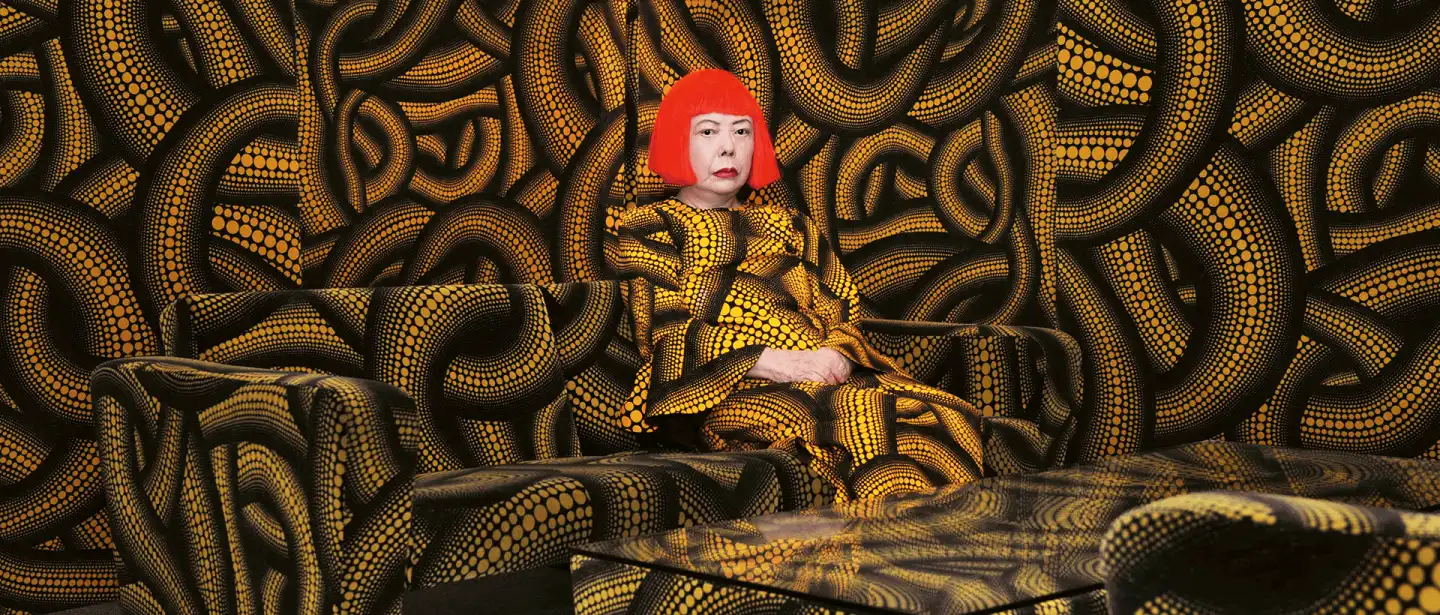
2. Yayoi Kusama
Stedelijk Museum, Amsterdam
11 September 2026–17 January 2027

Yayoi Kusama became one of the most recognisable artists alive, which was both an extraordinary historical correction and a peculiar form of disappearance. The dots survived. The pumpkins multiplied. The mirror rooms generated millions of photographs. Somewhere inside the global Kusama experience, the artist’s more unsettling history became increasingly difficult to see.
Opening shortly after her death at the age of 97, the Stedelijk Museum retrospective spans more than seven decades. It offers a chance to recover the artist from the brand built around her.
Kusama’s work emerged from hallucination, sexual anxiety, anti-war protest, repetition and the desire to dissolve the autonomous self. Her environments were never merely photogenic. They placed seduction beside annihilation. Infinity promised wonder, but it also threatened the disappearance of the body looking at it.
This tension is central to my longer analysis, Yayoi Kusama’s Infinity Mirror Rooms: The Polka-Dot Artist Who Turned Installation Art into a Global Obsession. Her art cannot be understood only through the current museum industry of immersion. The mirrored room did not begin as an elaborate background for the visitor. It began as a machine for making the visitor unstable.
The Amsterdam exhibition arrives at an uncomfortable moment. Kusama can now be canonised without being present to resist the process. The real question is not whether she deserves another retrospective. She clearly does. It is whether the museum can distinguish her radical pursuit of self-obliteration from the highly profitable spectacle of Kusama recognition.
3. Marina Abramović, Transforming Energy
Gallerie dell’Accademia, Venice
Until 18 October 2026

Marina Abramović is the first living woman to receive a major exhibition at the Gallerie dell’Accademia. The achievement matters, although the adjective “living” carries an unintended irony. Abramović has spent much of her career turning endurance into a rehearsal for disappearance.
Transforming Energy places her work inside one of Italy’s most historically charged museums. The encounter could easily become ceremonial: the great performance artist admitted into the temple of the Old Masters. Yet the more productive question concerns what happens when actions initially built around risk, presence and physical vulnerability enter a museum through objects, documentation and reconstruction.
Abramović has been accused of transforming performance into spirituality for the luxury economy. The criticism is not entirely unfair, but it can become lazy. Her work has always depended on the production of belief. The audience must believe that duration matters, that discomfort alters consciousness, and that the encounter is more than theatre.
I discussed this contradiction more directly in Marina Abramović in Venice: Between Presence and Belief, Where Does Transformation Truly Occur?. The question is not whether the crystals or participatory objects genuinely transmit energy. What matters is the system of expectation through which visitors are prepared to experience them as transformative.
At the Accademia, this mechanism becomes visible. Energy may be transformed, but it is also packaged, conserved and institutionally authenticated.
Recommended reading
The Short Story of Contemporary Art: A Guide to Key Movements, Works, Themes & Techniques
A concise and accessible map of the movements, works and ideas that shaped contemporary art. It is particularly useful for readers who want to place the artists in this guide within a wider historical context without reducing contemporary art to a sequence of dates and definitions.
As an Amazon Associate, I may earn from qualifying purchases.
4. GAZA, the Future Has an Ancient Heart
Fondazione Merz, Turin
Until 27 September 2026

How can a museum exhibit Gaza while Gaza is being destroyed?
The question cannot be resolved by good intentions. Nor can it be avoided. Organised by Fondazione Merz, the Museo Egizio in Turin and the Musée d’Art et d’Histoire in Geneva, GAZA, the Future Has an Ancient Heart places approximately eighty archaeological objects in dialogue with contemporary artists including Mirna Bamieh, Khalil Rabah, Vivien Sansour, Wael Shawky, Dima Srouji and Akram Zaatari.
Its fundamental gesture is to refuse the reduction of Gaza to the latest images of devastation. Gaza appears instead as a millennial crossroads of cultures, trade, memory and knowledge. This historical depth is politically necessary because destruction operates not only against bodies and buildings, but also against the possibility that a people might possess a past extending beyond the conflict used to define them.
Yet the exhibition also occupies difficult territory. Archaeology can return dignity, but it can also replace the unbearable present with a safer antiquity. Contemporary art can bear witness, but it can also convert urgency into institutional virtue.
This problem extends beyond Turin. During the Venice Biennale, I addressed it with Palestinian Museum US founder Faisal Saleh in “How You Curate Genocide?”: Faisal Saleh and the Palestinian Question Crossing the Venice Biennale. The question remains unresolved because an exhibition can provide historical depth and international attention without altering the conditions producing the violence.
This tension is precisely why the Fondazione Merz exhibition matters. It should not be visited for reassurance. Its significance lies in the impossibility of separating preservation from loss while destruction is still taking place. It also belongs to the wider archive of Palestinian art, where memory is never merely retrospective.
5. Cecilia Vicuña, El glaciar ido
Castello di Rivoli, Turin
Until 20 September 2026

Cecilia Vicuña’s first solo exhibition in an Italian museum arrives remarkably late. This delay tells us something about the canon’s ability to celebrate decolonial and ecological practices only after spending decades overlooking the artists who built them.
El glaciar ido begins with disappearance. The vanished glacier is not treated simply as an environmental fact but as a rupture involving language, Indigenous memory, water and political responsibility. Vicuña’s fragile constructions have often been described as poetic, a word that can make them sound gentler than they are. Their precariousness is not decorative. It is evidence.
I walked through the installation with curator Marcella Beccaria for Cecilia Vicuña at Castello di Rivoli: Inside the Quipu of the Vanished Glacier. That bodily encounter matters because the work cannot be reduced to an image of suspended wool. It changes according to the visitor’s position, movement and proximity.
Her installations, performances, drawings and quipu-inspired works resist the fantasy that damaged systems can be neatly restored. Threads connect, but they also expose distance. Materials gather without pretending to become whole again.
This exhibition deserves to be seen beside the Gaza project at Fondazione Merz. Both concern cultures threatened with erasure. Neither treats memory as a stable archive. In both, what survives does so precariously. The exhibition also expands the continuing discussion around eco and environmental art, particularly where ecology can no longer be separated from colonial history.
6. Félix González-Torres, Sweet Revenge
Museo Reina Sofía, Madrid
Until 12 October 2026

A pile of sweets can be replenished. A body cannot.
That contradiction remains at the centre of Félix González-Torres’s work. Sweet Revenge, the first solo exhibition devoted to him in Madrid, revisits an artist whose apparent minimalism concealed an extraordinarily precise politics of intimacy.
González-Torres understood that public and private life could not be separated so cleanly. Love, illness, citizenship, mourning and sexual identity entered his work without becoming illustrations of a cause. Visitors could take a sweet or a sheet of paper, slowly diminishing the artwork. Participation appeared generous, but it made every person complicit in an act of disappearance.
The relationship between loss, participation and replenishment is central to Félix González-Torres and the Silent Elegy of Untitled (Portrait of Ross in L.A.). It also connects his work to the larger history examined in Art, AIDS and Queer Love.
His influence is now so widespread that its source can be forgotten. Contemporary exhibitions are full of modest objects, personal archives and poetic acts of audience participation. Few carry the same economy or moral pressure.
In a culture that demands visible declarations of identity, González-Torres remains important because he never reduced politics to disclosure. The work speaks quietly, but the quiet is structural. It remains fundamental to the history of LGBTQ+ art, memory and public intimacy.
7. Igshaan Adams, Unsettling Dust: The Body’s Archive
Guggenheim Museum Bilbao
Until 1 November 2026

Dust usually enters museums as an enemy. It settles on objects, exposes neglect and must be removed. In Igshaan Adams’s work, it becomes a record of movement.
For his Guggenheim Bilbao installation, Adams draws on the “desire lines” produced by bodies repeatedly crossing the same ground. These unofficial paths disobey the routes imagined by planners. They reveal where people actually move rather than where authority expects them to go.
Born in Cape Town and shaped by the racial and spatial divisions of post-apartheid South Africa, Adams translates these traces into woven surfaces, suspended forms and accumulations of material. Textile is not treated as a return to craft or as a convenient metaphor for connection. It records how race, religion, class and sexuality are lived through space.
His practice belongs to a wider return of textile art, but its importance lies in refusing the easy opposition between craft and contemporary art. Woven material here is neither nostalgic nor reassuring. It functions as social evidence.
The title is exact. The body does not merely possess an archive. It produces one through repetition, contact and avoidance. What seems abstract from a distance is built from social pressure.
8. Tomás Saraceno, Ancestral Futures
Haus der Kunst, Munich
Until 7 February 2027

Tomás Saraceno has spent years imagining forms of life less dependent on gravity, fossil fuels and human supremacy. At their weakest, such projects can resemble beautifully engineered escape plans for a species unwilling to change its behaviour. At their strongest, they reorganise perception.
Ancestral Futures combines installation, research and multispecies collaboration. Even the exhibition’s title refuses the standard opposition between technological progress and ancestral knowledge. The future does not necessarily begin by abandoning the past.
The exhibition includes sensory propositions designed for non-human visitors, including works engaging the olfactory world of dogs. This detail might initially sound like institutional eccentricity. It carries a more serious challenge: museums are constructed around the human eye, the upright body and culturally trained habits of attention. What would an exhibition become if those assumptions were removed?
This question has become central to contemporary ecological art. The strongest eco-art no longer represents nature as an external subject. It examines the political and perceptual structures through which certain species, materials and forms of knowledge are allowed to matter.
Saraceno’s work does not provide a practical environmental programme. Art rarely does. Its value lies in exposing how limited the category of the visitor has been.
9. Light and Magic: The Birth of Art Photography
Tate Modern, London
Autumn 2026

There is something useful in returning to the origins of artistic photography at the moment when images have become almost frictionless.
This major Tate Modern exhibition examines Pictorialism as an international movement rather than a minor episode in which photographers attempted to imitate painting. Its practitioners manipulated negatives, surfaces, exposure and printing processes to insist that photography was constructed rather than merely captured.
The issue has become newly urgent. Artificial intelligence and generative art have revived an old anxiety: if an image is technically produced, manipulated or generated, where does authorship reside? Pictorialism cannot answer that question for us, but it reveals how little novelty the question contains.
Photography was never innocent evidence. Its claim to truth always depended on conventions, technologies and institutional trust. What changes in 2026 is not the fact of manipulation but its speed, scale and invisibility. The tension between material experience and mediated images also appears in Contemporary Art: Bridging the Physical and the Virtual.
A historical exhibition becomes contemporary when it disturbs the present. This one has the potential to do so.
10. The 90s
Tate Britain, London
1 October 2026–14 February 2027

The 1990s have returned, although not necessarily in the form their artists would have wanted. The decade is now sold as fashion, music, nightlife and analogue authenticity. Institutional nostalgia follows commercial nostalgia with suspicious efficiency.
Tate Britain’s The 90s revisits a period shaped by the Young British Artists, identity politics, cultural rebellion and the expanding relationship between art, celebrity and media. It was also the decade in which provocation learned to function as a reliable distribution system.
I explored that machinery in Young British Artists: Shock, Branding and the Art Market’s Perfect Rebellion. The YBAs did not simply produce controversial objects. They revealed how collectors, newspapers, galleries and institutions could collaborate in turning rebellion into an extremely efficient cultural product.
The Tate exhibition will be worth seeing if it resists the temptation to present the period as a sequence of iconic personalities and photogenic scandals. The deeper legacy of the 1990s is not formal. It lies in the transformation of the artist into a public character and of controversy into measurable attention.
Much of today’s art world, from Instagram visibility to museum branding, still operates inside that inheritance. The decade never really ended. Its mechanisms simply became ordinary.
11. Adam Pendleton, Some Wild Kind of Language
Stedelijk Museum, Amsterdam
10 October 2026–17 January 2027

Adam Pendleton works in the unstable territory between language and image. Words appear, repeat, become partially illegible and return as visual matter. Reading gives way to looking, then tries to reassert control.
Some Wild Kind of Language highlights Pendleton’s contribution to contemporary painting, publishing and conceptual practice. His idea of “Black Dada” is less a movement than an open structure in which Blackness, abstraction, historical fragments and avant-garde strategies remain in productive collision.
Pendleton’s work is especially relevant in a period obsessed with legibility. Institutions increasingly ask art to identify its subject, declare its position and become summarised in a paragraph of wall text. Pendleton does not abandon politics, but he denies the viewer immediate possession of its meaning.
That refusal places his practice within the continuing history of Conceptual Art, but it also unsettles the assumption that concept must arrive as a clearly stated proposition. Language becomes wild not when it stops communicating, but when it refuses to communicate on command.
12. Cézanne et nous
Grand Palais, Paris
23 September 2026–17 January 2027

The Courtauld, London (Samuel Courtauld Trust) © The Courtauld
A Cézanne exhibition may appear misplaced in a guide to contemporary art. That is precisely why this one belongs here.
Organised by the Centre Pompidou and the Musée d’Orsay, Cézanne et nous brings approximately seventy works by Cézanne into dialogue with around eighty artists influenced by him, extending from the historical avant-gardes to post-war abstraction and contemporary figures such as Wolfgang Tillmans.
Influence exhibitions are often exercises in cultural genealogy. A great male artist is positioned at the beginning of a family tree, and everyone else becomes evidence of his fertility. The title Cézanne and Us, however, creates room for a more difficult question. Who is included in that “us”, and what happens when artistic history is organised around inheritance?
Cézanne’s relevance does not depend on treating him as the father of modern art. It lies in the instability he introduced into seeing. Objects tilt, space refuses obedience and painting becomes a record of perception failing to settle. That unresolved inheritance connects the exhibition to the wider history of modern art rather than placing it outside contemporary debate.
13. Vies minuscules
Panthéon, Paris
24 September 2026–31 January 2027

Betacam noir et blanc, silencieux, durée: 72’55”
© Adagp, Paris, 2026, photo © Centre Pompidou, MNAM-CCI/Dist. GrandPalaisRmn
The Panthéon was created to monumentalise exemplary lives. Vies minuscules enters that architecture through people whom official history has considered too ordinary, private or socially marginal to remember.
The exhibition’s title, borrowed from Pierre Michon’s 1984 book, might be translated as Small Lives. Its curatorial challenge is considerable. Institutions have become skilled at recovering forgotten subjects, but recovery can reproduce the hierarchy it claims to dismantle. The museum still decides which invisible life has become visible enough to enter history.
Placed within the Panthéon, that contradiction becomes spatial. Fragile, intimate and sometimes infamous existences confront a building designed for national grandeur.
The exhibition matters because it does not merely add neglected names to an existing monument. It asks whether monumentality itself is an adequate form of remembrance. This is also one of the central questions running through the Journal’s writing on LGBTQ+ visibility, feminist art and the people whom official histories notice only after their disappearance.
14. Pipilotti Rist
Guggenheim Museum Bilbao
From 1 October 2026

Pipilotti Rist helped create the visual language that contemporary immersive art now repeats with diminishing returns. Saturated colours, enveloping projections, music and bodily scale have become familiar elements of cultural entertainment. In Rist’s work, however, pleasure has never been politically innocent.
Her new presentation in the Guggenheim Bilbao’s Film & Video gallery forms part of the museum’s autumn 2026 programme. Rist uses seduction without apologising for it. Bodies float, fruits split, domestic spaces become psychedelic and the boundary between tenderness and aggression remains porous.
The difficulty of looking at her work today is that the culture surrounding it has caught up with its surfaces. Advertising, music videos, wellness environments and immersive exhibitions have absorbed the grammar she helped develop. That broader transition from physical artwork to enveloping experience is examined in Contemporary Art: Bridging the Physical and the Virtual.
The question is whether Rist’s work can still make pleasure strange after the spectacle industry has learned to imitate it.
15. Leiko Ikemura, TransLucent: The Shape of Light
Gallerie dell’Accademia, Venice
From 10 September 2026
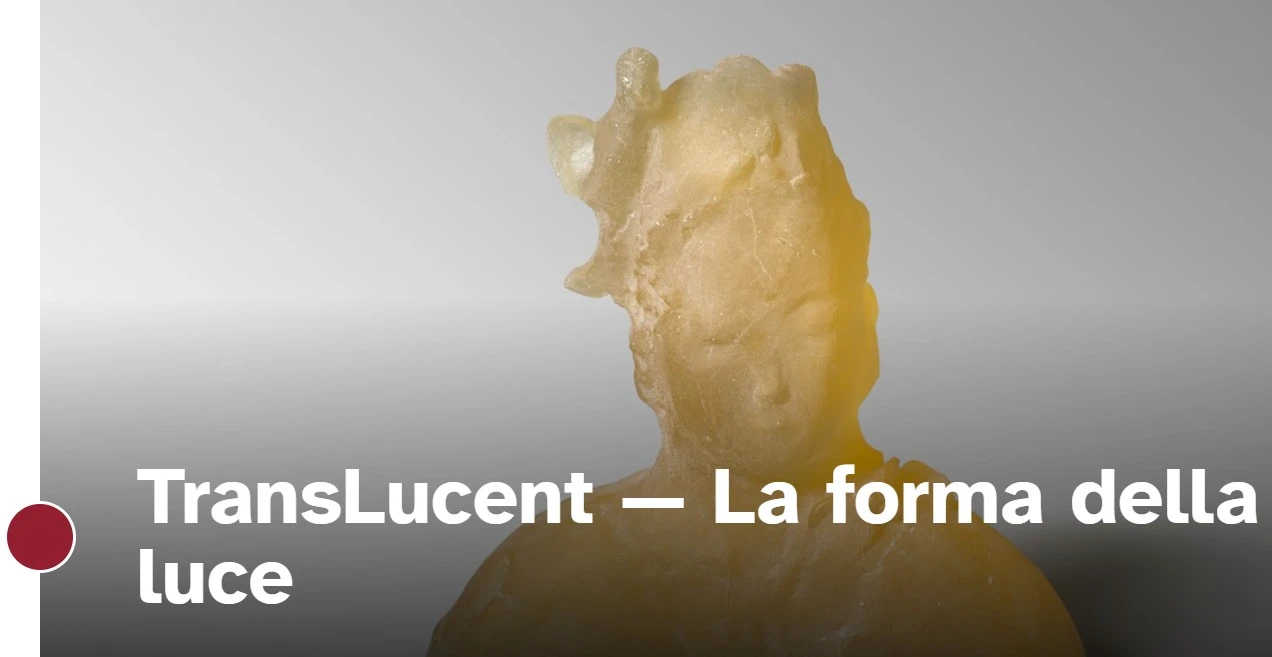
Leiko Ikemura’s figures appear to be arriving and disappearing at the same time. Human, animal and landscape forms enter one another without becoming hybrids designed for easy symbolic interpretation.
Opening at the Gallerie dell’Accademia on 10 September, TransLucent: The Shape of Light offers a quieter counterpoint to the scale of the Biennale and the institutional presence of Marina Abramović in the same museum.
Ikemura’s work is often approached through cultural plurality, particularly her movement between Japan and Europe. Yet biography alone cannot account for its strangeness. Her paintings and sculptures refuse the certainty of stable categories: female and animal, body and atmosphere, birth and extinction.
Translucency is different from transparency. The transparent promises complete visibility. The translucent allows light through while retaining opacity. In an art system that demands instant recognition, Ikemura protects the right of the image not to reveal everything.
What Europe’s Contemporary Art Exhibitions Tell Us About Autumn 2026
Taken together, these exhibitions suggest that contemporary art is moving through a period of institutional uncertainty.
Museums are still revising the canon, but every recovery now raises another question. Is the institution returning agency to an overlooked artist, or simply expanding its collection of usable histories? Political exhibitions are increasingly necessary, yet their visibility does not guarantee consequence. Immersive art continues to attract audiences, even as the language of immersion is absorbed by entertainment and commerce.
Several of the strongest exhibitions this autumn concern disappearance: the vanished glacier in Vicuña, the diminishing objects of González-Torres, the threatened memory of Gaza, the minor lives entering the Panthéon, the self dissolving in Kusama’s infinity. This may not be accidental.
For decades, contemporary art placed enormous faith in visibility. To show was to recognise. To represent was to resist erasure. To enter the museum was to enter history.
That faith has weakened. We now see wars, ecological collapse, structural inequality and threatened cultures with unprecedented clarity. The image circulates, attention peaks, and the machinery continues.
The essential exhibitions of autumn 2026 are therefore not necessarily those that make something visible for the first time. They are those that ask what visibility can still accomplish after looking has become one of the most exhausted activities of contemporary life.
Related Articles
- Venice Biennale 2026: Artists, Pavilions and Critical Reviews
- The Prize Nobody Wants: Venice Biennale 2026 and the Collapse of Neutrality
- Marina Abramović in Venice: Between Presence and Belief
- Yayoi Kusama’s Infinity Mirror Rooms
- Cecilia Vicuña at Castello di Rivoli: Inside the Quipu of the Vanished Glacier
- Art, AIDS and Queer Love
- Young British Artists: Shock, Branding and the Art Market’s Perfect Rebellion
- Contemporary Art: Bridging the Physical and the Virtual


