Everyone Cried for This Robot. But It Was Never Dying
Sun Yuan and Peng Yu’s Can’t Help Myself became the internet’s favourite dying machine. The story was false. What the
Read More
Chinese art cannot be reduced to tradition, political dissent or the demands of the international market. Its contemporary practices move across painting, installation, performance, film, digital culture and robotic art, reflecting the tensions produced by censorship, accelerated modernisation, collective memory and technological control.
Artists such as Ai Weiwei, Fang Lijun, Yue Minjun, Zhang Xiaogang, Xiao Lu, He Chengyao, Sun Yuan and Peng Yu have developed very different responses to China’s social and political transformations. Their works examine authority, conformity, the body, surveillance and the unstable relationship between individual experience and collective history.
Movements such as Cynical Realism became internationally recognisable through exaggerated smiles, repetition and political ambiguity. Later practices expanded into performance, moving images, automation and technology, while global institutions and markets helped shape what the category of “Chinese contemporary art” was expected to represent.
This archive collects articles, artist profiles and critical readings on Chinese art, from post-1989 practices to contemporary debates around visibility, censorship, feminism, borders, artificial intelligence and the global art system.
 Sun Yuan e Peng Yu - Can’t Help Myself (2016)
Sun Yuan and Peng Yu’s Can’t Help Myself became the internet’s favourite dying machine. The story was false. What the
Read More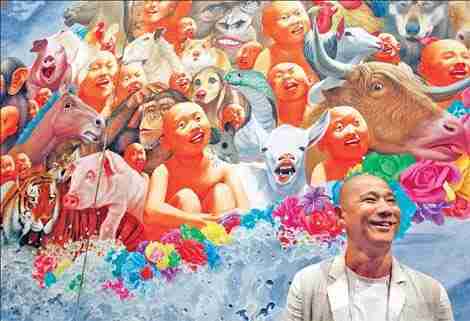
Cynical Realism Art: A Movement Rooted in Smiling Disillusionment Cynical Realism emerged in early 1990s China, resonating within contemporary art
Read More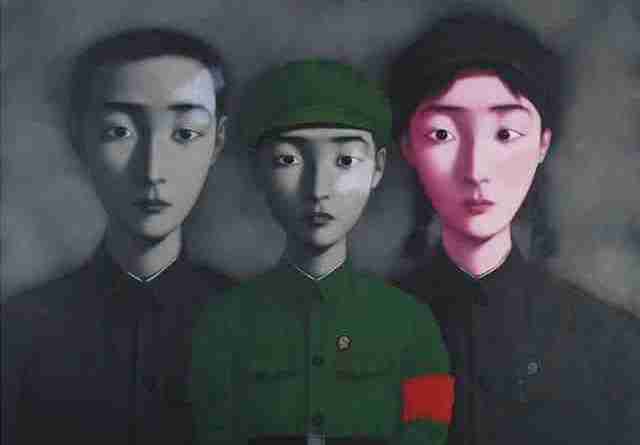 Zhang Xiaogang — Bloodline: Big Family No. 3
Faded Memories: Zhang Xiaogang’s Big Family and the Weight of Collective Nostalgia Zhang Xiaogang’s contributions to Cynical Realism are deeply
Read More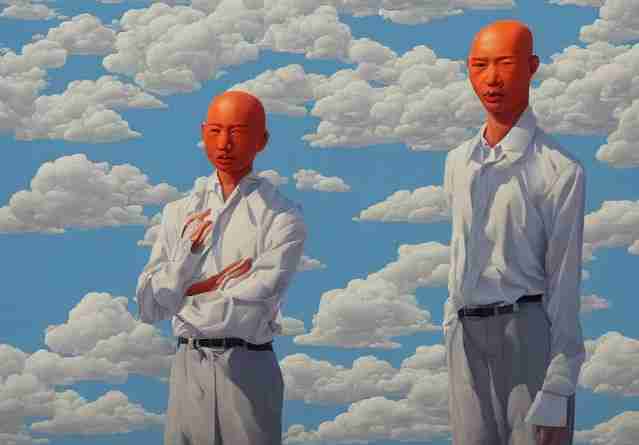 Fang Lijun - The Center of the World
The Existential Yawn: Fang Lijun’s Bald Figures and the Disenchantment of a Generation Fang Lijun did not simply paint bald
Read More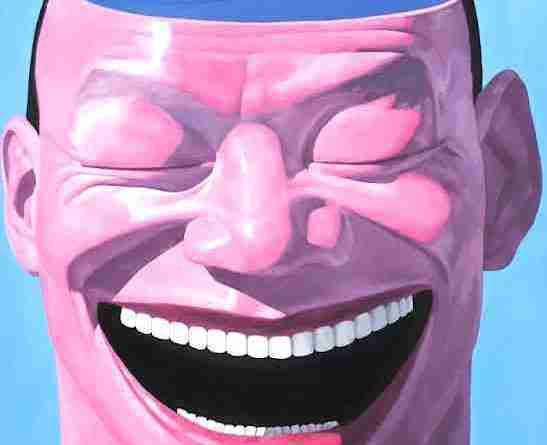 Yue Minjun - Sea of the Brain
The Surreal Grin: Yue Minjun’s Haunting Smiles and the Mask of Conformity Art can sometimes be disarmingly joyful on the
Read More Sight-Pei-Shen-Qian Mark-Rothko
A Legacy Tarnished: From Prestige to Infamy The Knoedler Gallery, once the epitome of high culture and prestige in the
Read More Ai Weiwei - World Map
Ai Weiwei: Art, Activism, and Social Change (2025 Guide) Ai Weiwei: Fusing Art and Activism to Challenge Global Boundaries Ai
Read More