
Cynical Realism Art Unmask Smiles: The Irony and Insight of Chinese
Cynical Realism Art: A Movement Rooted in Smiling Disillusionment
Cynical Realism emerged in early 1990s China, resonating within contemporary art through an ironic and critical lens. The movement is perhaps best known for its iconic Cynical Realism art smiles, which often feature exaggerated grins reflecting both satire and social critique. The movement grew in a period marked by profound socio-political upheaval after the events of Tiananmen Square in 1989.
As China accelerated modernization and economic reform, the social landscape changed drastically. Cynical Realism art stands out for its unique depiction of smiles, adding a layer of cynicism to the culture’s changing mood. Many felt alienated and disillusioned. Against this backdrop, Cynical Realism found its voice: an artistic reaction to uncertainty, contradiction, and pressure, using humor, cynicism, and satire as a way to cope with personal and collective disorientation.
Its artists pictured an existential crisis, questioning the values of a society seemingly focused on progress at the cost of individual freedoms and identity. Through irony and subversion, they reflected a widespread disconnection from both culture and politics, turning art into a mirror of tensions inside Chinese society. In this sense, Cynical Realism also functioned as psychological resilience for a generation facing the loss of ideological certainty, exposing the gap between propaganda and lived experience. And notably, those signature Cynical Realism art smiles became symbols of this struggle.
Key Artists and Their Stories
Fang Lijun: The Bald Truth
Fang Lijun is one of the movement’s most emblematic figures. Sometimes the art is defined by the cynical realism smiles that show defiance, despair, and cynicism. His bald protagonists drift in existential space, yawning, shouting, or staring, embodying ennui and disenchantment. The work mirrors a generation grappling with harsh realities and muted hope.
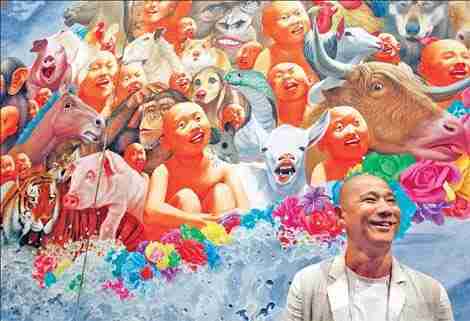
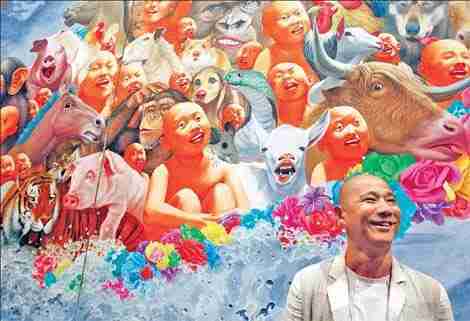
Yue Minjun: Laughing Through Irony
Yue Minjun’s cloned, grinning figures deliver sharp commentary on conformity and forced cheerfulness. There is often an interplay of Cynical Realism art and smiles in these pieces, especially as bright palettes clash with bleak settings, creating a jarring paradox that asks viewers to look past the facade and question social and political realities.
Zhang Xiaogang: A Familial Reflection
Zhang Xiaogang’s Big Family series echoes faded studio portraits, exploring memory, kinship, and the Cultural Revolution’s imprint. Sometimes, his approach subtly references the debate around art, smiles, and cynical realism, with anomalies operating like clues that reveal how fragile identity becomes under relentless modernization.
Ai Weiwei: The Spirit of Cynicism
While not strictly a Cynical Realist, Ai Weiwei channels the movement’s critical ethos. With influences from Cynical Realism art, and occasionally referencing symbolic smiles, his practice confronts power and amplifies dissent by reworking traditional forms to expose cultural erosion and rights abuses.
The Legacy of Cynical Realism
Mixing irony with critique, Cynical Realism opens a window onto the clash between traditional aesthetics and modern pressures. Those art smiles, full of cynicism, have become part of its visual fingerprint. It frames art as resistance, repair, and a tool for facing uncomfortable truths. Beyond individual angst, the movement delivers a precise critique of social norms, showing how art mirrors and challenges life. It is a subject that rewards slow looking, and slow thinking.


