
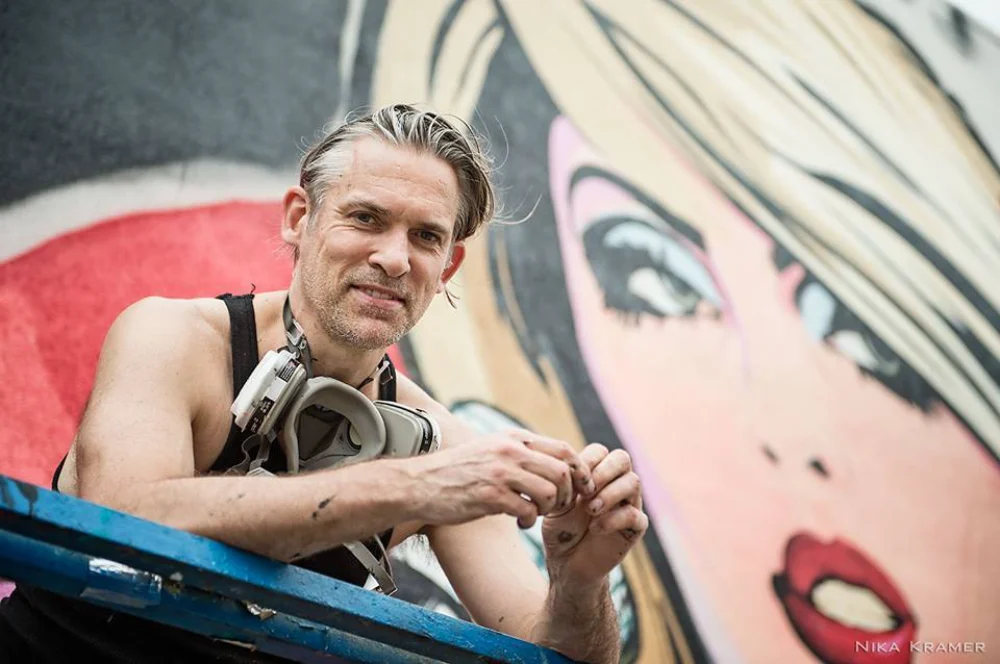
Stephen Bliss, the Artist Behind the Iconic Images of GTA – Grand Theft Auto
Best known for shaping the visual identity of one of the most popular video games of all time, Stephen Bliss comes to Italy for Lucca Comics & Games. He talks to us about his move from commercial illustration to a more personal artistic practice, spanning murals, décollage and fictional worlds of his own.
An Italian version of this interview was originally published by Artribune.
Many people know the images of British artist and illustrator Stephen Bliss before they know his name. The job ended; the images, however, continued to circulate. From 2001 to 2016, Bliss worked as a senior artist at Rockstar Games, helping to define the visual language of Grand Theft Auto — one of the most popular video games of all time — through images that, although created within a corporate and collaborative structure, remain closely associated with his distinctive hand.
After leaving Rockstar, Bliss explored different languages and contexts: he painted murals, developed the fictional universe of Fear City, and created works from layers of advertising posters removed from the walls of New York. Ahead of his appearance at Lucca Comics & Games, we spoke with him…
Interview with Stephen Bliss, in Italy for Lucca Comics
The images you created for Grand Theft Auto have outlived their original function as promotional material. For many people they became part of childhood, memory and even identity. What happens when an image becomes emotionally owned by millions of other people?
I have often felt uncomfortable about being seen only as “the Grand Theft Auto artist.” Then hundreds of people write to me and say, “This was the face of my childhood. These images were the most important thing to me while I was growing up. They inspired me to become an artist.” At that point I think I have to embrace it. If the work moved so many people, then I achieved something.
You helped build one of the most recognizable visual languages in contemporary popular culture. That language emerged from a large collaborative structure. How did your individual vision coexist with the identity of the company?
I cannot talk too much about the company or that relationship. Everything belongs to the company. What I can say is that people choose specific artists for specific jobs. My vision and my style were trusted. The fact that millions of people are still influenced by that work shows that they made the right judgement.
I want to ask a more uncomfortable question. Seen through the language of contemporary art today, some of the women in your images can appear less like subjects than objects of male desire. Is it enough to describe those images as satire, or did the work also participate in the sexism it represented?
I always made the women look strong, but yes, they were wearing bikinis. There was a period when I felt politically uncomfortable about that. I do not really care anymore. If you are offended by a woman in a bikini holding a martini glass, then perhaps you need to reconsider your priorities.
That work was commercial. It had a purpose: to excite people and make them want to play the game. If you focus too much on the sex and violence, you miss the quality of what is underneath and the excellence of the larger image.
Can an image criticise the male gaze while still depending on its seductive power?
Someone like Andrew Tate, and the whole manosphere industry, has a much more dangerous influence on young boys than one of my cartoons. My work is entertainment. I am not the enemy.
After leaving the company, you concentrated on murals and gallery projects. Did your visual language genuinely change, or did the same language simply enter another context and acquire the label of fine art?
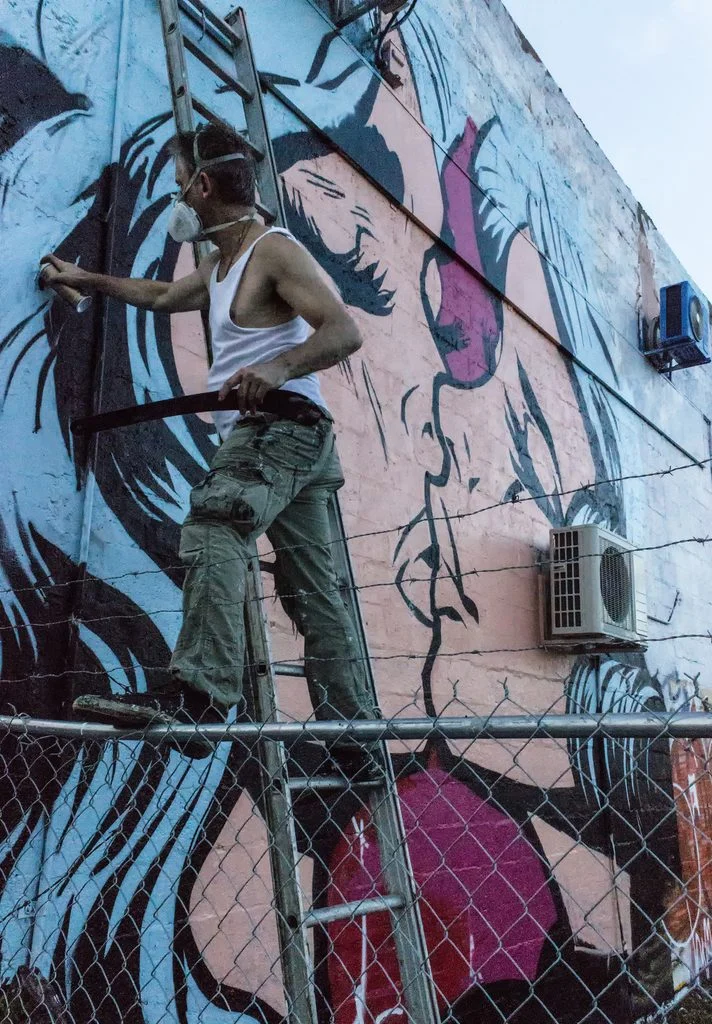
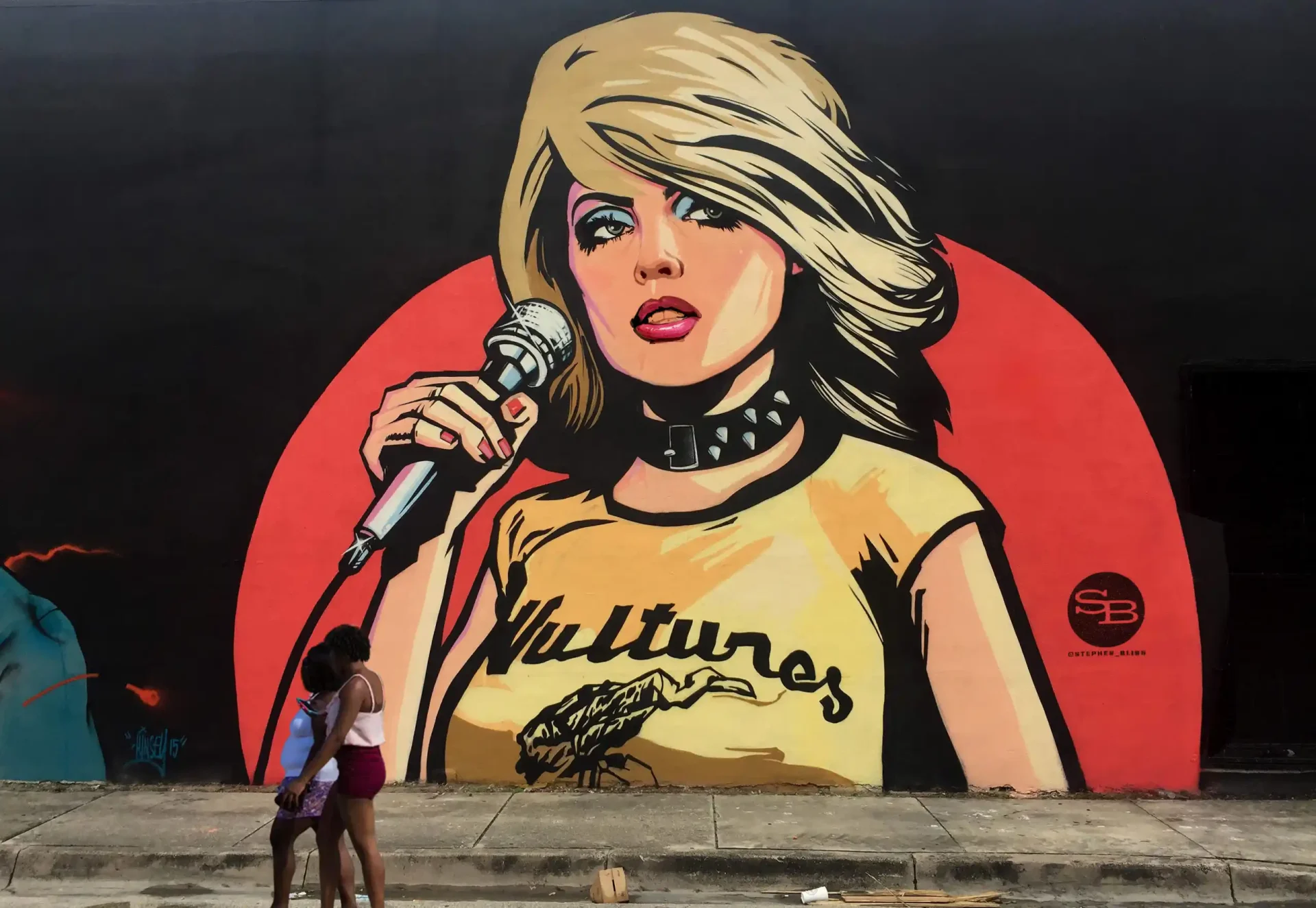
Changing it was exactly what I was trying to do. I learned how to spray-paint. The first job I did after leaving Rockstar was a portrait of Debbie Harry about five storeys high. I was up in a cherry picker, trying to learn as I worked.
Painting a wall is completely different from drawing by moving your wrist in front of a screen. You have to come down, cross the road, look at it, go back up and correct it. I made a lot of mistakes.
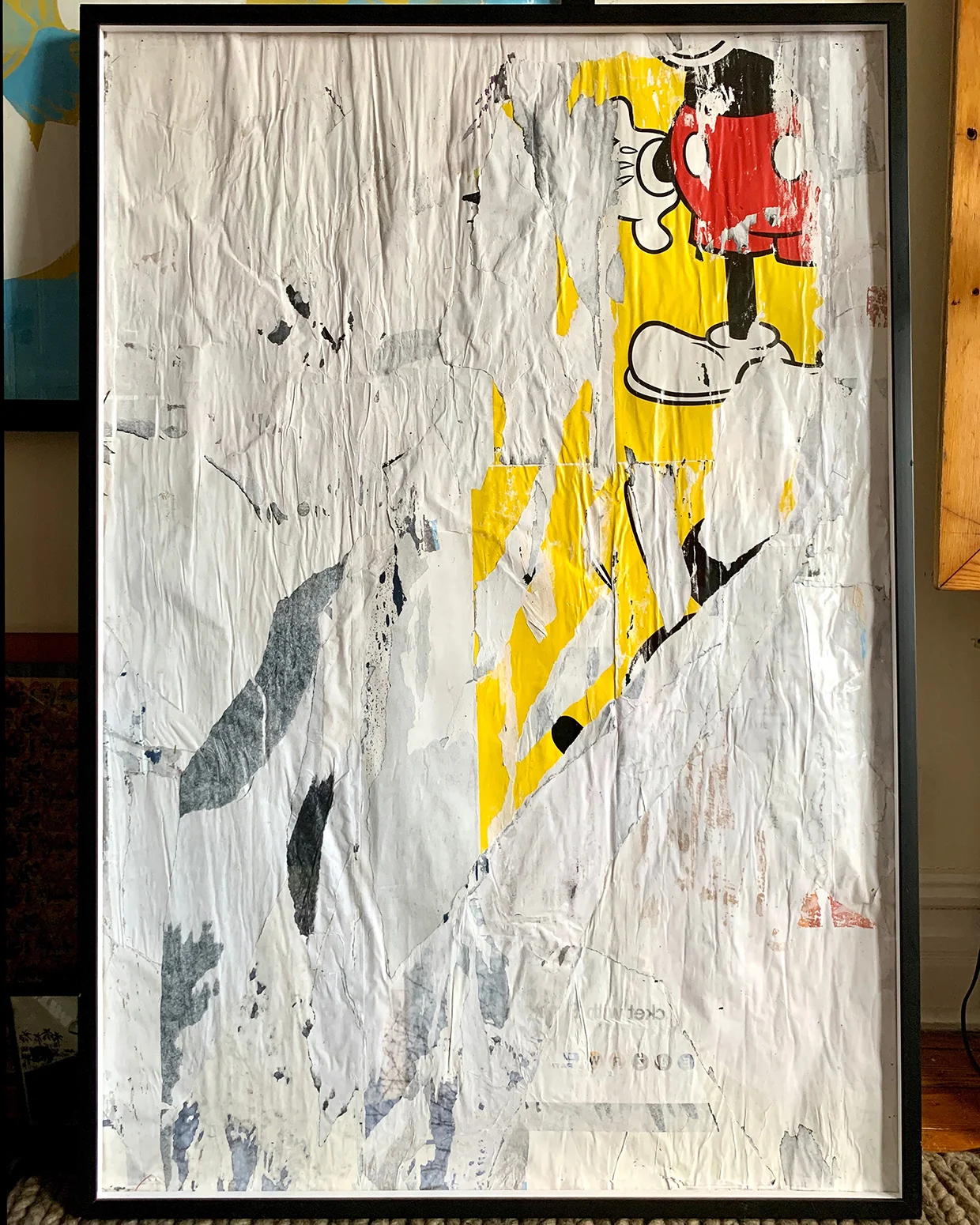
At the same time, you began removing layers of advertising posters from New York hoardings, cutting into them, painting figures into them and transferring them onto canvas. Décollage has a specific history, from Mimmo Rotella to the affichistes. What do your palimpsests add to that tradition?
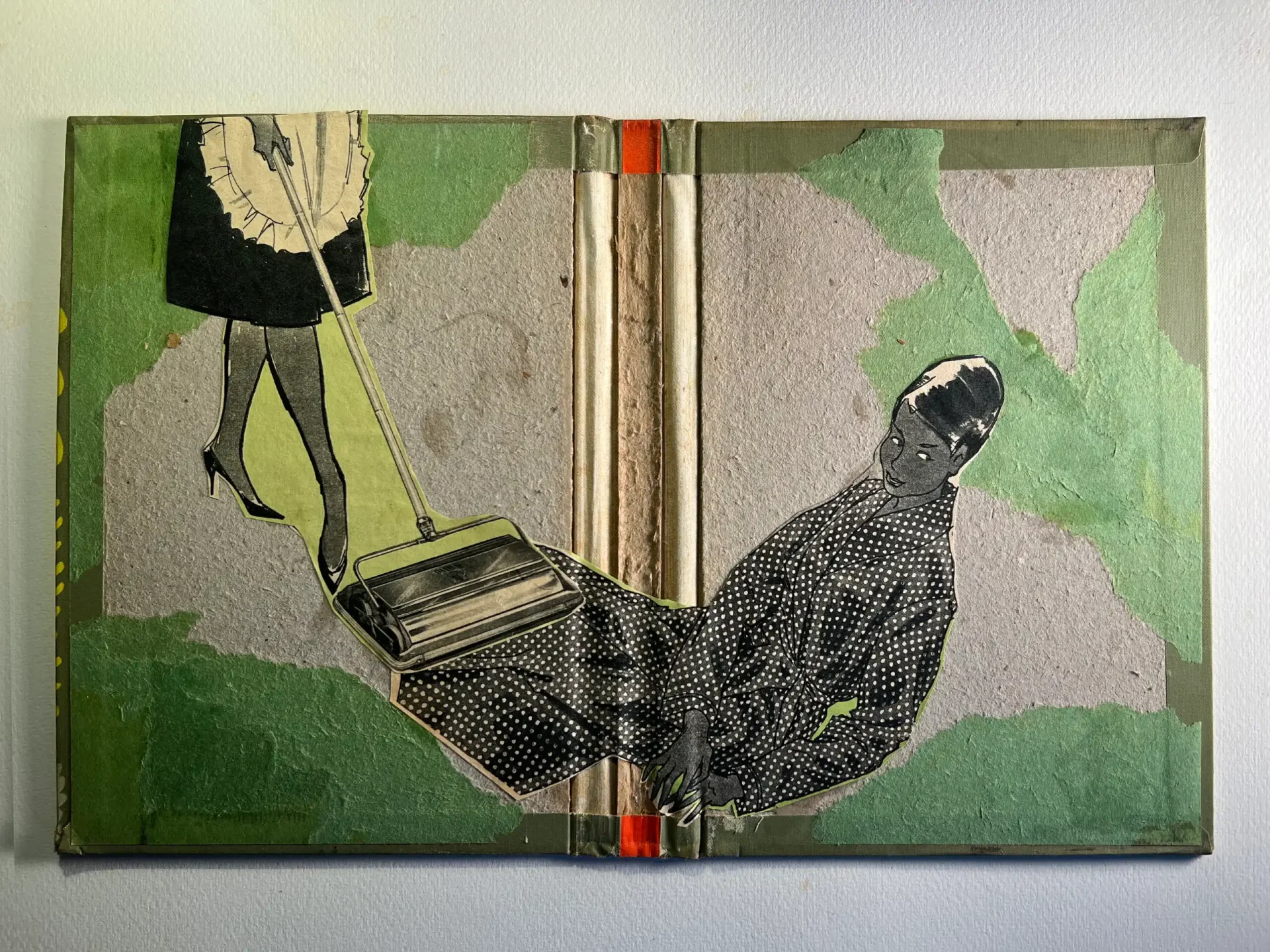
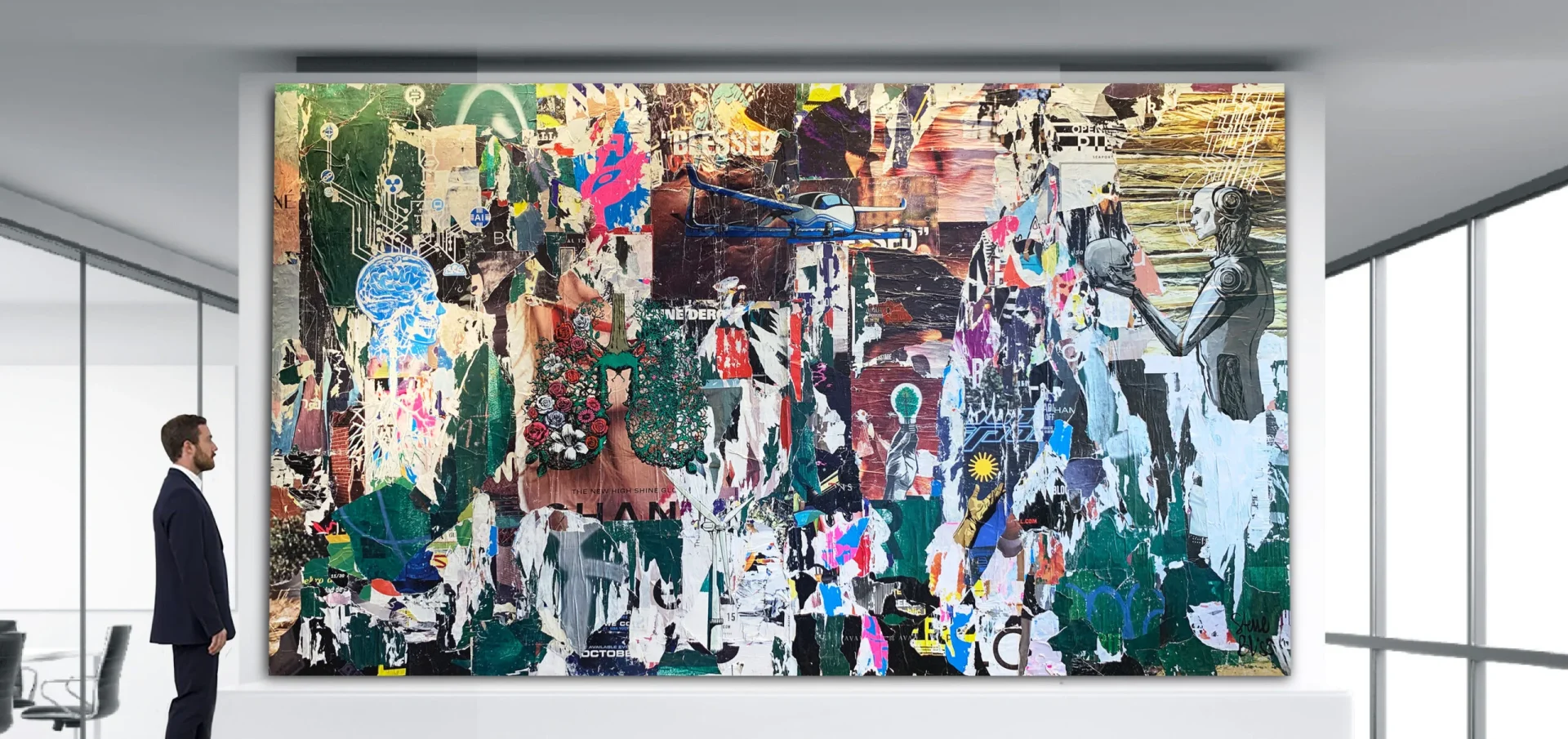
Rotella blows my mind, but I discovered him after I had started making that work. When I lived in New York, I walked to the office every morning and saw these incredible walls of torn posters. The weather loosened the glue, sections fell away, someone sprayed over them, a person wrote a poem, someone else added stickers. It was a collaboration between the weather and strangers.
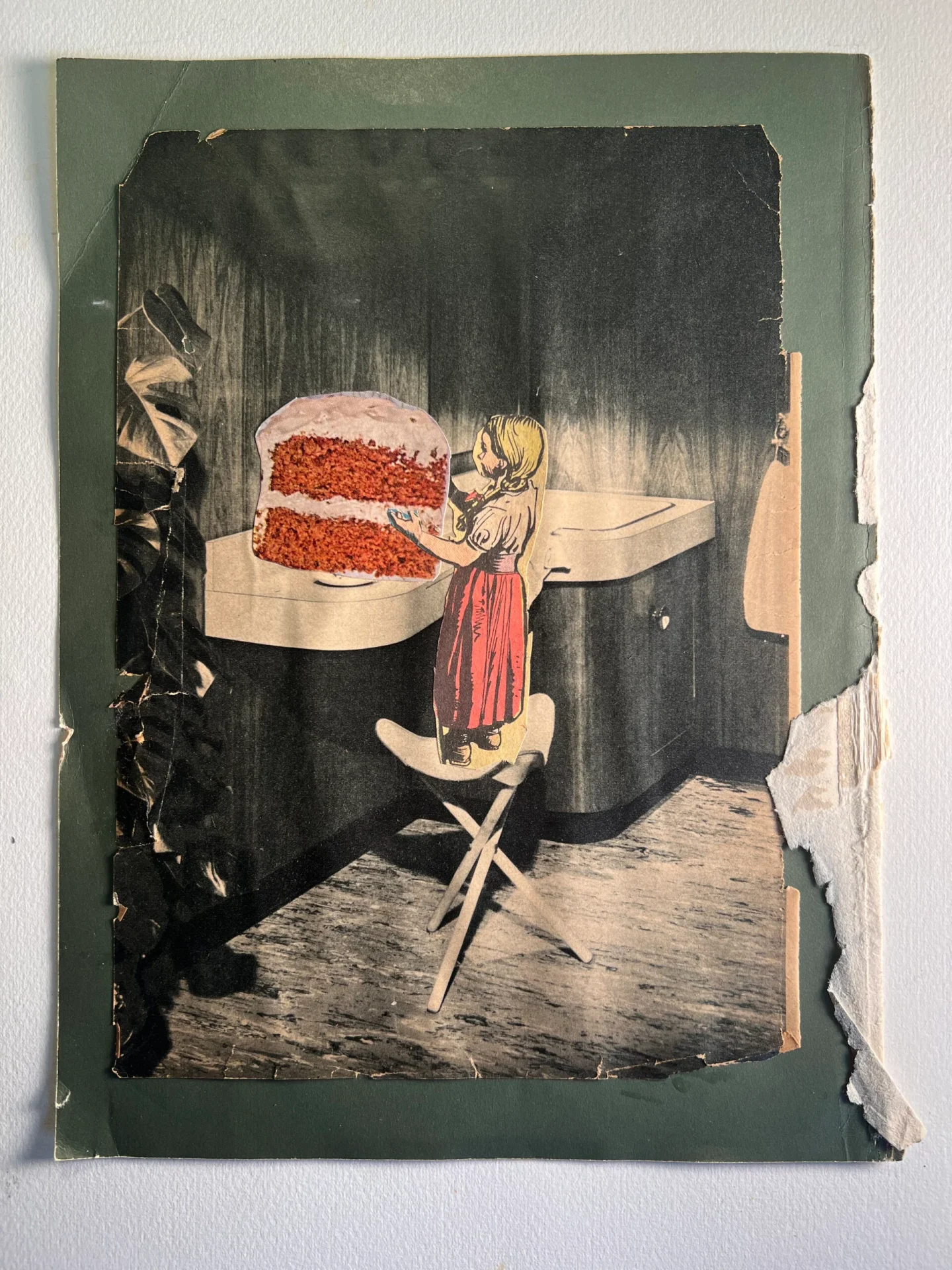
I would choose a section, take it to my studio, cut into it with a knife, paint figures into it and place it on canvas. My intervention became another part of that collaboration inside the city. Then I put it in a gallery and, apparently, it became art.
Once, a man stopped me and said, “Do not take that. I love that wall.”
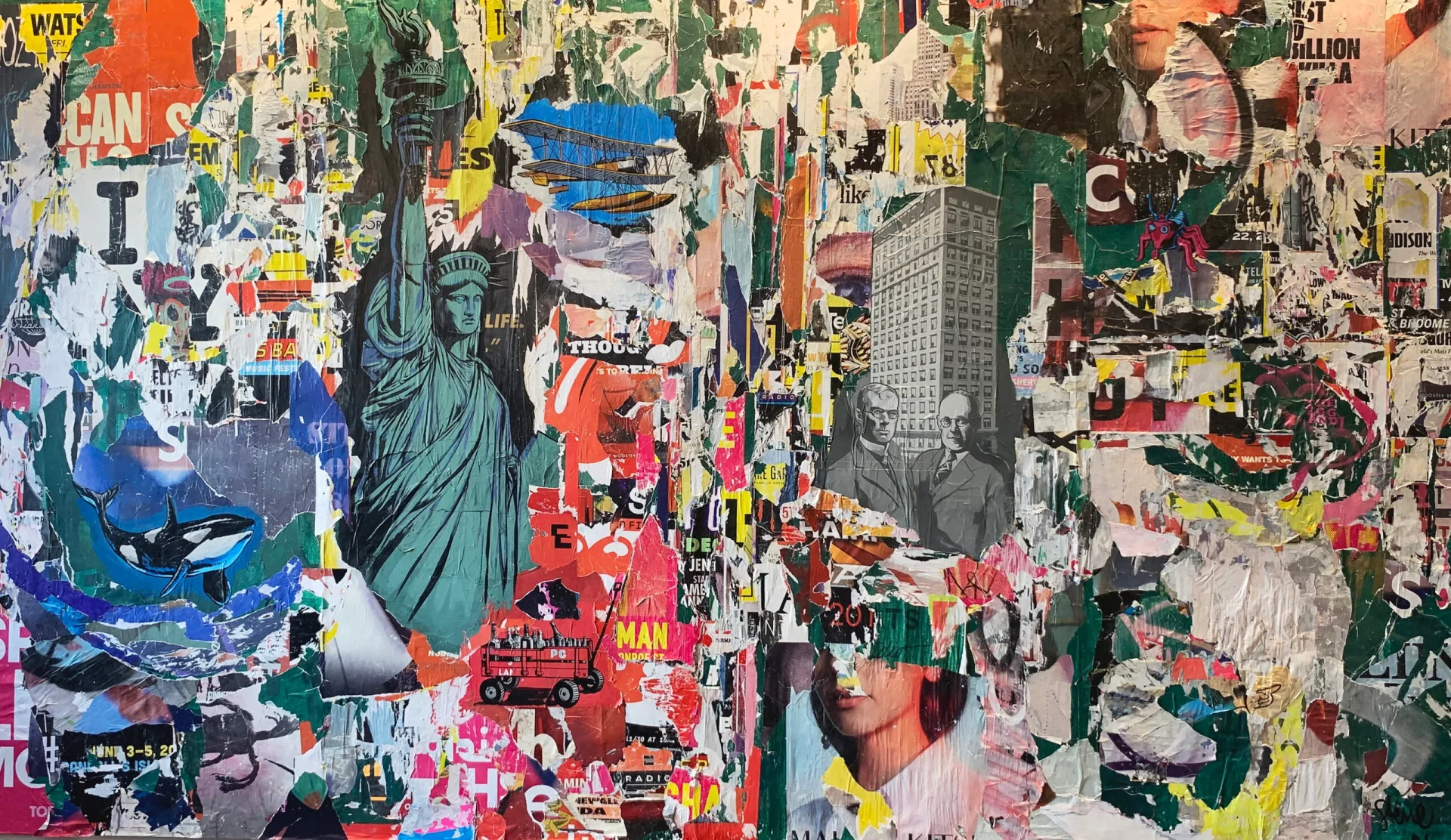
You spent years making images designed to attract attention and produce desire. In the palimpsests, advertising is torn, layered and partially erased. Is there an element of self-criticism in that gesture?
I wanted to make something for galleries and express another part of myself that needed to come out. But when I post those works on social media, they receive very little attention, even though I care deeply about them. People see only a small part of what I want to achieve.
With Fear City, you reversed the structure in which you had previously worked and created an intellectual property of your own: 3,333 NFTs, characters, comics, filters, clothing and physical collaborations. Were you making an artwork, an imaginary world or a brand?
Fear City began as an NFT project. I wanted six characters and hundreds of hand-painted variations. Over the past four or five years, I have created thousands of characters and stories, and I did not want all that work to go to waste. It became my personal project.
This year I have not been painting as much. I am writing Fear City Stories and trying to learn how to write a novel. I reached a point where I no longer wanted to make visual images. I felt I could tell stories better in words.
The images of GTA gave you a degree of visibility that very few artists ever experience, but visibility did not translate into institutional recognition. Do you still want museums, curators and galleries to recognise the rest of your work?
Getting into the art world is a whole different game. Unless you know the right people, that story gets pushed aside. It is almost as if the art system is fixed.
I could never really break through, and I was never comfortable trying. It was frustrating and upsetting. I thought the work would speak for itself. Of course, the art world is a bigger monster than that.
For me, there is also a question of class. I am from a working-class background, and making art every day always felt like an indulgence. I thought I should be in an office, doing a real job, earning money. If I had enough money, however, making art is all I would do. I would not give a shit what anyone thought about it. And I think that would be my best work.
Fear City: Thumper #1
Enter Stephen Bliss’s Fear City through Thumper #1, the comic that expands the characters and fictional universe discussed in this interview.
Related Articles
- The Art World Is Worth Billions. Why Are So Many Artists Still Broke?
- Is Banksy One Person?
- 2000s Art Movements: 11 Trends & Key Artists
“`


