
Art After the Digital Revolution: Who Controls Its Value, Visibility and Future?
The digital revolution has not made painting, sculpture, or the handmade object obsolete. It has changed something less visible and more decisive: the systems through which art is produced, discovered, authenticated, sold, and remembered. The real conflict is therefore not between canvas and code. It is between different forms of access, ownership, attention, and trust.
This distinction matters because technological change is often described as a simple succession: one medium arrives and replaces another. Art history rarely works that way. Photography did not abolish painting, video did not end sculpture, and digital art has not emptied museums. New technologies alter what older media can mean. They also redistribute power around them.
Material art did not become irrelevant
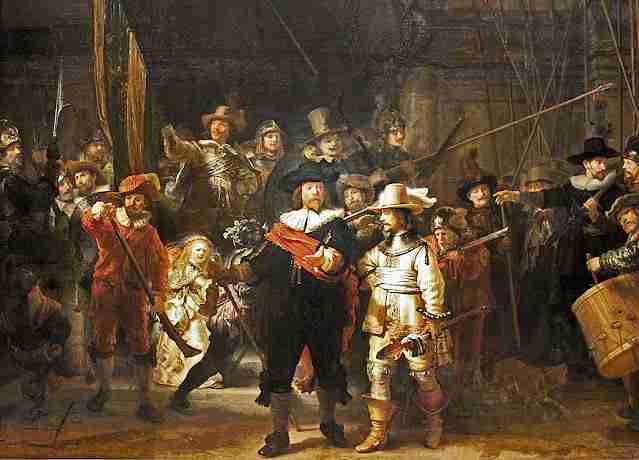
A physical artwork carries information that cannot be reduced to an image on a screen. Scale, weight, surface, damage, restoration, and the viewer’s movement through space are part of the work. Standing before Rembrandt’s The Night Watch is not equivalent to seeing its reproduction. The painting’s size, layered surface, and physical history shape the encounter before interpretation even begins.
Materiality alone, however, does not explain value. Traditional art is supported by an infrastructure of museums, scholars, conservators, dealers, auction houses, catalogues, and collectors. Provenance is not merely an attractive story attached to an object. It is a chain of evidence through which authorship, ownership, and historical significance are negotiated.
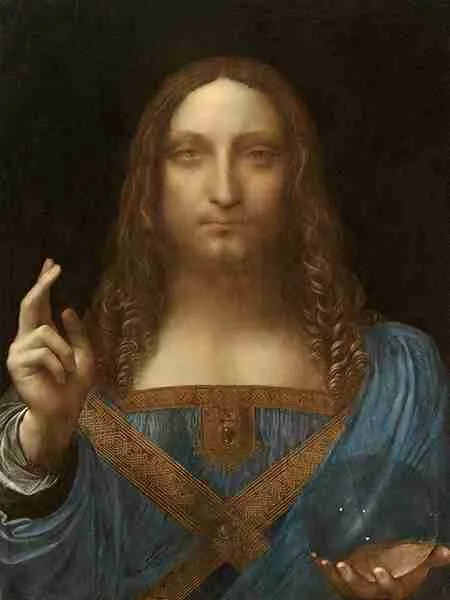
The case of Leonardo da Vinci’s Salvator Mundi makes this visible. Its spectacular price depended not only on the panel itself but on attribution, conservation, documentation, rarity, publicity, and institutional authority. The work sold at Christie’s in 2017 for $450.3 million, but its history also shows that market value is never produced by material presence alone. The official Christie’s lot record traces the provenance and the long process through which the painting was studied and reclassified.
Digital art does not destroy this system. It exposes how much of the system was already based on shared belief, documentation, scarcity, and institutional recognition.
Digital art changed the infrastructure, not the need for trust
Digital art widened the range of artistic tools: code, data, real-time systems, virtual environments, machine learning, and networked participation. Artists no longer need to treat the screen as a substitute for paper or canvas. The technology can become the medium, the subject, or the environment in which the work unfolds.
Refik Anadol, for example, turns datasets and machine-learning processes into architectural experiences. His work is digital, but it is also spatial and bodily. It depends on projection, scale, sound, movement, and the physical presence of an audience. This is not the disappearance of material experience. It is a new arrangement of it.
Beeple revealed a different transformation. When Everydays: The First 5000 Days sold at Christie’s for $69.3 million in 2021, the sale proved that a major auction house could create a market event around a purely digital work. It did not prove that every NFT possessed durable artistic or financial value. Christie’s own Beeple archive records the exceptional result, but an exceptional auction should not be mistaken for a universal economic model.
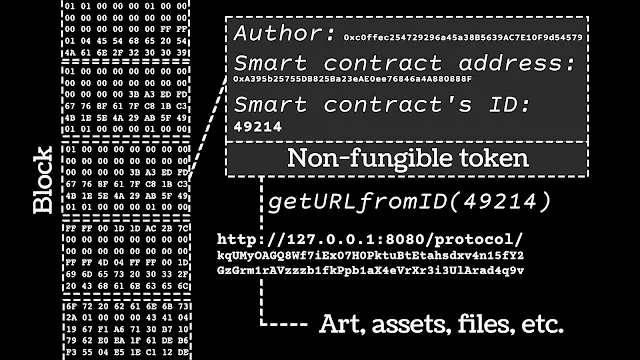
The NFT boom confused several different things: the artwork, the token, the certificate, the marketplace, and the promise of future resale. Blockchain technology can record transactions, but it does not by itself establish artistic quality, secure copyright, preserve an external file, or guarantee royalties across every platform. The collapse of much of the speculative market did not prove that digital art had failed. It showed that a financial instrument and an artistic medium should never have been treated as the same thing.
Access increased, but so did dependence
Digital distribution lowered some barriers. An artist can publish work globally without first being selected by a gallery, editor, or institution. That possibility is real and important. Yet bypassing an old gatekeeper often means becoming dependent on a new one: platforms, algorithms, search engines, marketplaces, and proprietary software.
The result is not complete democratization but a transfer of power. Production has become easier and circulation faster, while attention remains scarce. Artists can reach more people, but they must compete inside systems whose rules they do not control. Visibility can disappear after an algorithmic change, an account suspension, a platform closure, or a shift in audience behaviour.
This is the central economic contradiction of contemporary digital culture. The cost of publishing approaches zero while the cost of being noticed continues to rise. Artists are encouraged to become permanent content producers, marketers, archivists, and community managers. Apparent independence can conceal a new form of unpaid labour.
What the market data actually suggests
The art market has not moved in a straight line from physical to digital. According to the Art Basel and UBS Art Market Report 2026, online channels remain part of the market, while paintings, works on paper, and sculpture continue to dominate sales by value. Digital, film, and video art increased their share, but they remain a small part of the total market. The important change is not replacement. It is the normalization of hybrid behaviour: collectors discover works online, speak to dealers remotely, bid through digital platforms, and still acquire physical objects.
A similar hybridization is happening in galleries and auction houses. Online viewing rooms, remote bidding, digital catalogues, and social media are now ordinary tools. They expand geographical reach, but they do not eliminate reputation or personal relationships. For expensive or historically significant works, buyers still seek expertise, condition reports, provenance, and institutional reassurance.
Artists: more tools, more invisible work
Artists can combine programming, fabrication, painting, video, and performance without accepting an old hierarchy of media. The risk is not that everyone will become a programmer. It is that artistic practice will be judged by its compatibility with platforms: speed, frequency, recognizability, and shareability. A work can circulate widely because it performs well as content, not because it sustains attention as art.
Galleries: from gatekeepers to interpreters
Galleries cannot justify their role simply by controlling access to artists. Their stronger future role is to provide context, continuity, care, and informed judgment. Smaller galleries face real pressure from technology costs, fairs, logistics, and global competition. Yet a website or marketplace cannot automatically replace sustained critical advocacy for an artist’s work.
Collectors: ownership is no longer enough
Collectors of digital work must ask questions that buyers of a painting can sometimes postpone. Where is the work stored? Which files and software are required? Can it be migrated when hardware becomes obsolete? What exactly does the purchase include: a token, a licence, an edition, exhibition rights, or copyright? Conservation begins at the moment of acquisition, not decades later.
The problem is preservation, not nostalgia
The fear that digital practices will cause traditional craftsmanship to disappear is too simple. Skills survive when they remain culturally and economically supported, not when they are protected from contact with new tools. A painter can use digital sketches. A sculptor can combine hand modelling with 3D fabrication. A digital artist may depend on technicians, custom hardware, and complex installation skills.
Digital works also have their own material vulnerabilities. Servers fail, formats become unreadable, links break, platforms close, and software licences expire. The Library of Congress digital-preservation programme makes clear that digital continuity requires active management. Unlike the fantasy of an immaterial file that lasts forever, preservation demands documentation, migration, storage, and institutional responsibility.
This changes the meaning of conservation. Museums and collectors must preserve not only an object but sometimes a system: source files, hardware, dependencies, instructions, artist intent, and acceptable future variations. Digital art may be reproducible, yet the conditions that make a particular work authentic can be extremely fragile.
AI makes the question more urgent
Artificial intelligence intensifies the same tension. It expands image production while making authorship, consent, labour, and originality harder to locate. The significant question is not whether an AI-generated image can look impressive. It is whether an artist can turn a widely available technical capacity into a situated, accountable, and consequential practice.
The abundance of generated images makes selection and context more valuable, not less. When almost anyone can produce a polished image in seconds, technical finish loses some of its power as evidence of artistic commitment. What matters more is why the work exists, what decisions shaped it, whose material entered the system, and what the artist is prepared to take responsibility for.
For readers who want a broader introduction to this changing field, Evolution Through Art examines how artistic forms develop across changing cultural and technological conditions.
The future of art will be hybrid, but not automatically democratic
Painting will not survive because it is old, and digital art will not matter simply because it is new. Each medium must still produce forms of experience, thought, and consequence that cannot be reduced to novelty or market excitement.
The future is likely to be hybrid, but hybridity is not a solution in itself. A museum can add augmented reality without deepening an encounter. An artist can mint a token without creating meaningful scarcity. A gallery can open an online viewing room without widening access. Technology changes the available mechanisms; it does not determine how responsibly they will be used.
The decisive question is therefore not whether code will replace the brush. It is who controls the conditions under which either one becomes visible, credible, ownable, and preservable. Art evolves when its forms change. Its institutions must evolve when the distribution of power around those forms changes. That is the transformation now underway.


