
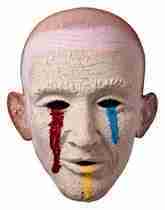
Funk Art: California’s Irreverent Anti-Style Movement
Funk Art: The Bold, Irreverent California Movement (1960s Guide)
Funk Art emerged in the mid-1960s, especially in Northern California, as a deliberately irreverent answer to seriousness and “good taste.” Instead of purity and restraint, Funk artists chose bold color, messy humor, and personal storytelling. As a result, the movement mixed critique and comedy, reflecting disillusionment with American culture while celebrating individuality and the everyday.
Where Funk Art came from
Funk Art developed as a reaction to the non-objectivity of Abstract Expressionism and the impersonal coolness of Minimalism. However, it didn’t simply “reject” those movements—it replaced distance with intimacy. Funk artists wanted work that felt tangible, approachable, and intensely personal. Therefore, they often used everyday objects and ordinary materials to carry emotional and social narratives.
Robert Arneson: clay as critique
Robert Arneson became one of the movement’s defining figures by pushing ceramics into the center of fine art conversations. He used clay for irreverent, sometimes self-mocking busts and sculptures. As a result, he challenged the hierarchy that treated ceramics as “craft” rather than serious art, while also using humor to sharpen social commentary.
Peter Voulkos: Abstract Expressionism in ceramics
Peter Voulkos transformed ceramics through methods borrowed from Abstract Expressionism. Instead of polished pottery, he built rugged, tactile forms that emphasized gesture and force. In other words, the work treats clay like an arena—bold, experimental, and intentionally unstable.
Wally Hedrick: assemblage and political satire
Wally Hedrick used found objects and assemblage to critique political and social systems. Moreover, his work often drew from pop culture and satire to target consumerism and militarization. The humor matters here: it invites viewers in, then turns the joke into a challenge.
Viola Frey: scale, power, and social roles
Viola Frey is known for monumental ceramic figures. Their exaggerated scale and color push viewers to confront social roles and power dynamics. At the same time, the work resists tidy conclusions: it can feel playful and unsettling in the same moment.
Legacy: why Funk Art still shows up in contemporary culture
Funk Art helped bridge modern and contemporary attitudes by normalizing rule-breaking, mixed media, and the collapse of “high/low” divisions. Consequently, it influenced later tendencies that embraced awkwardness, rawness, and anti-elitist energy, including strands of Bad Painting and aspects of street culture. Ultimately, Funk Art remains a reminder that seriousness isn’t the only route to truth—sometimes humor delivers the sharper critique.


