The New York School: Defining Abstract Expressionism
Revolutionizing the Art World The New York School, also known as Abstract Expressionism, emerged in the late 1940s and early
Read More
Willem de Kooning (Rotterdam, 1904–East Hampton, 1997) was a Dutch-American painter and a central figure of Abstract Expressionism and the New York School. His work resisted the separation between abstraction and representation, allowing bodies, landscapes and gestural marks to emerge, disappear and return reappear within the same painting.
AfterAfter training in commercial and fine art in Rotterdam, de Kooning travelled to the United States in 1926 and settled in New York. During the 1940s, he developed an increasingly fragmented visual language built from rapid revisions, scraped surfaces and intersecting lines. Unlike the expansive chromatic fields of Mark Rothko or Clyfford Still, his paintings preserve the visible conflict between drawing, colour and bodily gesture.
His Women paintings, publicly exhibited in 1953, returned the female figure to a movement frequently associated with pure abstraction. Their distorted bodies, aggressive brushwork and exaggerated expressions produced some of the most debated images in post-war American art. Critics have interpreted them as confrontations with art history, sexuality and mass-media imagery, while others have questioned their relationship with misogyny and the male gaze.
Like Robert Motherwell, de Kooning treated painting as a process of revision rather than the execution of a predetermined image. His inclusion among the Abstract Imagists also reflects his ability to make recognisable forms surface within abstraction. This tag gathers articles, exhibition reviews and critical perspectives on Willem de Kooning, his paintings and his continuing influence on contemporary art.
 Barnett Newman - Who's Afraid of Red, Yellow and Blue IV
Revolutionizing the Art World The New York School, also known as Abstract Expressionism, emerged in the late 1940s and early
Read More Willem de Kooning - Woman-Ochre
Willem de Kooning: Where Abstract Expressionism Collides with the Human Figure In the landscape of Abstract Expressionism, few artists remain
Read More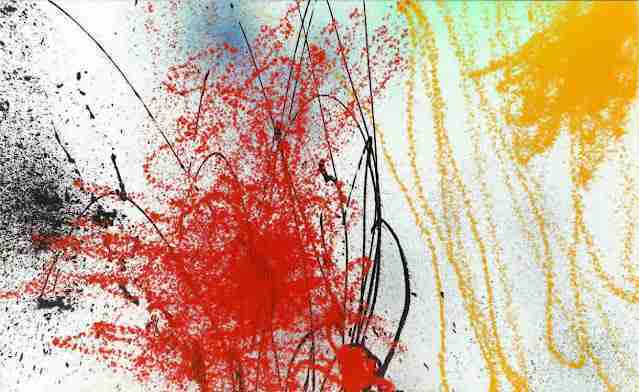 Hans Hartung - Untitle
Tachism: Postwar Paris and the Lyrical Politics of the Brushstroke In the wake of World War II, the art world
Read More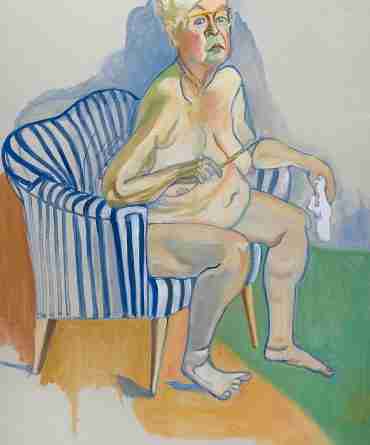 Alice Neel
New York Figurative Expressionism is usually described as the return of the human figure after the triumph of Abstract Expressionism.
Read More American Figurative Expressionism
While mid-century American modernism marched aggressively toward the pure abstraction of the New York School, a stubborn counter-current refused to
Read More