Decade of Excess: Exploring the Maximalist Art Movement of the 1990s
Exploring the Maximalist Art Movement of the 1990s In the 1990s, the art world saw a dynamic shift toward more
Read More
Superflat is a theory of the surface as much as a visual style. Introduced by Takashi Murakami around 2000, it draws a line between the compressed space of Japanese painting and prints and the flat, saturated worlds of manga and anime. But its argument goes beyond appearance: the hierarchies separating fine art from popular culture, and an original artwork from a commercial image, are less stable than they seem.
Murakami also uses Superflat to examine postwar Japanese culture. Cute characters and immaculate surfaces can carry desire, unease and historical memory at the same time. An image may move from a painting to a toy or a luxury product; its commercial success does not settle whether it is celebrating consumer culture or exposing it. That unresolved tension is central to Superflat.
In this archive, Takashi Murakami builds a visual and commercial system around the idea. Chiho Aoshima fills its polished surfaces with ghosts, living cities and ecological anxiety. Yoshitomo Nara, often discussed alongside Superflat, offers a more solitary and resistant vision of apparent cuteness. The articles below follow these differences rather than treating the artists as examples of a single look.
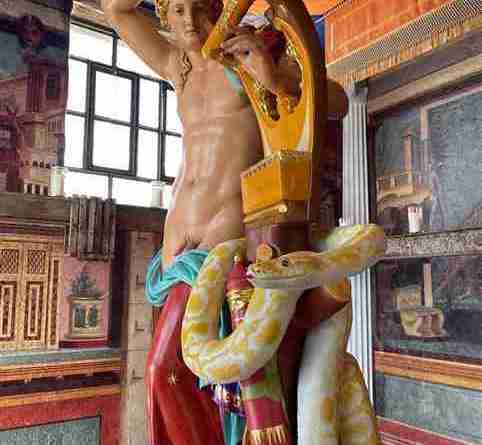 Jeff Koons — Apollo Kithara
Exploring the Maximalist Art Movement of the 1990s In the 1990s, the art world saw a dynamic shift toward more
Read More Takashi Murakami - Flowers Blooming in This World and the Land of Nirvana
The first time I came across a Superflat exhibition, I was not sure whether I was looking at contemporary art
Read More Yoshitomo Nara — Cosmic Girls Eyes Opened Eyes Closed.
Yoshitomo Nara: innocence, rebellion, and the soul of Superflat (2025 Guide) Cute, Menacing, and Deeply Human: Exploring Nara’s Complex World
Read More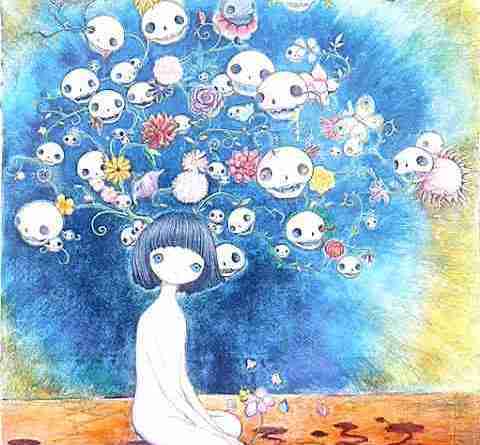 Chiho Aoshima - The Souls and Flowers Around Me
Chiho Aoshima turns the polished surface of Superflat into a world of ghosts, cities, flowers and catastrophe Chiho Aoshima’s images
Read More Takashi Murakami smiling in front of one of his colorful art pieces
Merging Japanese Tradition with Contemporary Pop Aesthetics Takashi Murakami (born February 1, 1962, in Tokyo) is a multifaceted artist whose
Read More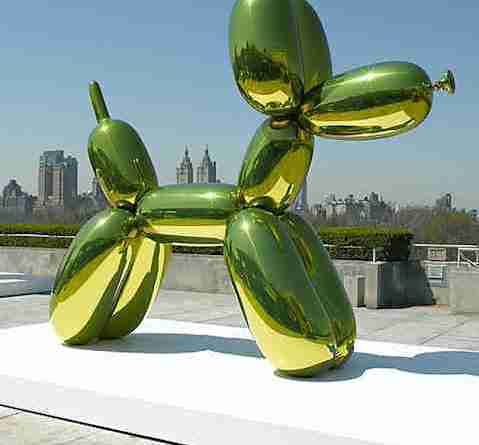 Neo-Pop art
Neo-Pop Art: From Pop’s Legacy to the Digital Age of Irony, Consumerism, and Cultural Critique Neo-Pop is an art movement
Read More