Unraveling the Mystique of Pseudorealism: A Modern Art Phenomenon
The Enigmatic World of Pseudorealism In the ever-evolving landscape of modern art, Pseudorealism has emerged as a captivating and enigmatic
Read More
Stuckism is an international art movement founded in London in 1999 by Billy Childish and Charles Thomson. Emerging partly as a reaction against the dominance of conceptual art and the institutional success of the Young British Artists, Stuckism argued for a renewed importance of figurative painting, personal expression and artistic authenticity.
The movement takes its name from an insult reportedly directed at Billy Childish by Tracey Emin, who accused him of being “stuck” in his artistic practice. Childish and Thomson transformed the term into the name of a movement whose provocative manifestos challenged conceptualism, postmodern irony, the art market and what they regarded as the increasing separation between artistic production and direct human experience.
Painting occupies a central position within Stuckist thinking. Rather than treating it as an exhausted historical medium, the Stuckists present painting as a means of combining thought, emotion, observation and subjective experience. Their position developed into the broader idea of Remodernism, proposed as an alternative to postmodernism and as an attempt to recover meaning, communication and spiritual or emotional depth within contemporary art.
Stuckism has also developed through exhibitions, demonstrations, manifestos and a deliberately confrontational relationship with major art institutions, particularly the Tate and the Turner Prize. From its original group of thirteen artists in Britain, independent Stuckist groups subsequently appeared across numerous countries, turning what began as a small London movement into an international network of artists with different interpretations of its principles.
On The Art Trace, this tag collects articles, essays and critical references examining Stuckism, its artists and manifestos, its defence of figurative painting and its continuing confrontation with conceptual art, institutional power and the dominant narratives of contemporary art.
 Pseudorealism Art
The Enigmatic World of Pseudorealism In the ever-evolving landscape of modern art, Pseudorealism has emerged as a captivating and enigmatic
Read More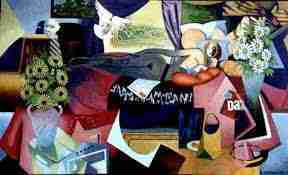 Stuckism Art Example
Stuckism: A Rejection of Conceptualism in Favor of Traditional Painting Stuckism, a movement that originated at the turn of the
Read More Ella Guru - Goodbye Columbus
How Ella Guru’s Unique Vision Exemplifies the Stuckist Ethos and Challenges Contemporary Art Norms Ella Guru’s Artistic Background: From Music
Read More Paul Harvey - Stuckism 1999-2006
Exploring How Paul Harvey’s Vibrant, Narrative-Driven Paintings Exemplify the Core Principles of Stuckism Paul Harvey’s artistic journey: from graphic design
Read More Charles Thomson - Artist and Model
How Charles Thomson’s Vision and Leadership Shaped a Global Artistic Movement The Influence of Charles Thomson Charles Thomson is a
Read More Billy Childish - Clamming on maud
Exploring the Life, Art, and Influence of Billy Childish The Maverick Who Redefined Contemporary Expression Billy Childish is a name
Read More