Sandro Chia: Myth, Body and the Theatrical Return to Painting
How Sandro Chia turned myth, color and the human figure into a postmodern stage for painting after Conceptual Art. Sandro
Read More
Neo-Expressionism emerged in the late 1970s and dominated the international art scene throughout the 1980s as a powerful revival of raw, figurative, and highly emotive painting. Rejecting the cool detachment of Minimalism and Conceptual Art, artists associated with this movement embraced large-scale canvases, aggressive and impasto brushwork, recognizable imagery, and intense psychological and historical narratives. Working across Germany, Italy, the United States, and beyond, these practitioners reintroduced myth, allegory, and subjective human experience into contemporary art, often addressing the lingering traumas of history, national identity, and the existential conditions of modern life.
Characterized by a deliberate return to traditional materials like oil paint mixed with unconventional elements, Neo-Expressionism restored painting to a position of cultural urgency and critical debate. Movements such as the Transavanguardia in Italy and the Neue Wilden in Germany demonstrated a shared desire to break free from modernist orthodoxy through vibrant color palettes, mythic symbolism, and gestural energy. Today, Neo-Expressionism remains a vital chapter in contemporary art history, recognized for its fierce independence, emotional intensity, and its profound impact on how contemporary artists negotiate figuration, storytelling, and materiality.
 Sandro Chia - Discussione su l’arte e la pittura (Discussion on Art and Painting), 1999
How Sandro Chia turned myth, color and the human figure into a postmodern stage for painting after Conceptual Art. Sandro
Read More Julian Schnabel — Untitled
Redefining Art with Broken Plates and Boundless Vision Julian Schnabel occupies a singular position in late-20th-century painting: a Neo-Expressionist who
Read More Valerio Berruti — studio and fresco detail
Neo-Expressionist Intimacy in Fresco and Light Born in 1977 in Alba (Piedmont), Valerio Berruti has emerged as a distinctive voice
Read More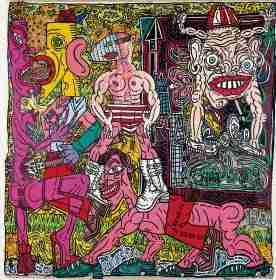 Robert Combas - Greatest hits du monde
Figuration Libre: France’s Punk Rebellion Against 1980s Art Conformity SEO subtitle: Robert Combas, Hervé Di Rosa, and the French return
Read More
Neo-Expressionism: Painting After the End of Certainties In the grand tapestry of art history, Neo-Expressionism emerges as a vivid, turbulent
Read More