Castello di Rivoli Has Rehung Arte Povera. Sung Tieu’s Ruin Complicates the Story
A reconstructed Berlin corridor, a burning Memphis church and a rehung Arte Povera Collection reveal how Castello di Rivoli preserves and reframes history.
Read More

Michelangelo Pistoletto, a central figure of Arte Povera and an artist who turned the mirror, the everyday gesture, and social responsibility into instruments of thought.
From the Mirror Paintings to the Minus Objects, from the Third Paradise to Cittadellarte, this section follows Pistoletto’s work as a living laboratory: not only a chapter in Italian art history, but an open question about what art can do when it stops simply representing the world and begins to change its relationships.
 Christelle Oyiri & Neva Wireko, Hauntology of an OG, 2025, installation view of the exhibition Inserzioni, Castello di Rivoli Museo d’Arte Contemporanea, Rivoli-Turin, 2026. Courtesy Castello di Rivoli Museo d’Arte Contemporanea, Rivoli-Turin. Photo: Sebastiano Pellion di Persano
A reconstructed Berlin corridor, a burning Memphis church and a rehung Arte Povera Collection reveal how Castello di Rivoli preserves and reframes history.
Read More Jago, Habemus Hominem (Left), and Chiara Camoni, Con te con tutto, Italian Pavilion (Right)
While Jago wins over audiences and institutions, part of the art system still dismisses him as obvious, rhetorical and media-driven.
Read More Cittadellarte, Biella, Italy. Photo by Pierluigi Di Pietro.
Why the Third Paradise still matters today, but not only as a symbol Before he entered the room Read the
Read More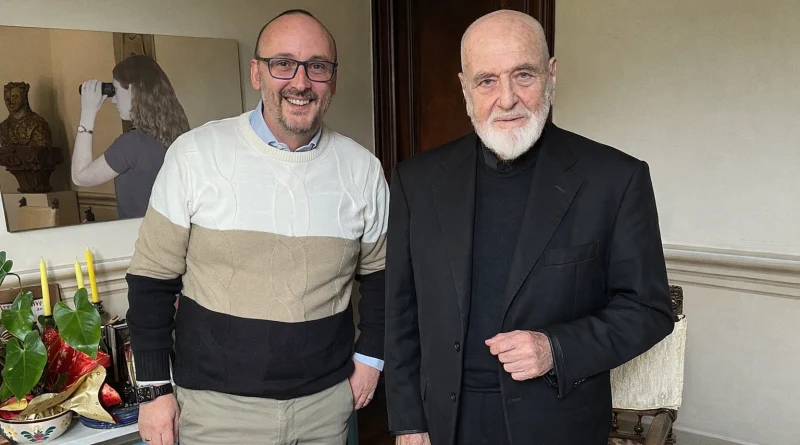 Michelangelo Pistoletto with Antonino La Vela, with a mirror painting in the background.
On the day of his 93rd birthday, Michelangelo Pistoletto speaks about truth, ego, the Third Paradise and demopraxy, reminding us
Read More Michelangelo Pistoletto- Mirror Paintings
Embracing Simplicity: The Richness of Arte Povera Arte Povera is one of the most influential Italian art movements of the
Read More