The Story of the Guerrilla Girls: Interview with Alice Neel, Original Member
Translation of the original Italian article published by Artribune on August 2, 2025 By Antonino La Vela Link to original
Read More
Alice Neel was an American painter and one of the most distinctive portraitists of the twentieth century. Best known for her psychologically intense paintings of people, she developed a deeply human form of figurative art that explored identity, vulnerability, class, gender, sexuality, race, ageing, and the social realities of modern American life.
Born in Pennsylvania in 1900, Neel pursued figurative painting during decades in which abstraction increasingly dominated the American art world. Rather than following prevailing artistic movements, she continued to paint the human figure, transforming portraiture into a means of psychological observation and social engagement.
Neel preferred to describe her portraits as “pictures of people.” Physical resemblance was only part of her interest. Through expressive lines, exposed brushwork, unusual colours, distorted proportions, and often sparse backgrounds, she attempted to reveal the emotional and psychological presence of the person sitting before her.
Her subjects came from remarkably different social environments. She painted family members, neighbours, children, lovers, writers, artists, intellectuals, political activists, immigrants, working-class people, queer figures, and individuals encountered within the communities where she lived. Her years in Spanish Harlem were particularly significant, allowing her work to record a socially and culturally diverse New York rarely represented within mainstream American portraiture of the period.
Women occupy a particularly important position in Alice Neel’s art. Her paintings of pregnancy, motherhood, ageing, sexuality, and the nude challenged idealised conventions surrounding the representation of the female body. Pregnant bodies, ageing bodies, and psychologically complex female subjects appear without the traditional expectation that they exist primarily as objects of beauty or desire.
Her portraits frequently expose vulnerability rather than conceal it. In her celebrated 1970 portrait of Andy Warhol, for example, the artist appears shirtless, his scarred torso and surgical corset visible after the 1968 shooting that nearly killed him. Neel replaces Warhol’s carefully constructed public persona with an image of physical fragility and psychological withdrawal.
Politics and social inequality were also deeply embedded in Neel’s practice. Her paintings engage with the Great Depression, labour activism, racism, sexism, migration, feminism, and civil rights, not by illustrating political slogans but by giving individual people an intense and uncompromising presence.
Neel’s work complicates the traditional distinction between portraiture and social history. Each sitter remains an individual personality, yet collectively her paintings form an extraordinary visual record of twentieth-century America and of people who were frequently absent from established representations of cultural and political power.
Today, Alice Neel is recognised as a major figure in American figurative painting and an important reference for contemporary discussions surrounding portraiture, feminism, identity, representation, the body, and the politics of visibility.
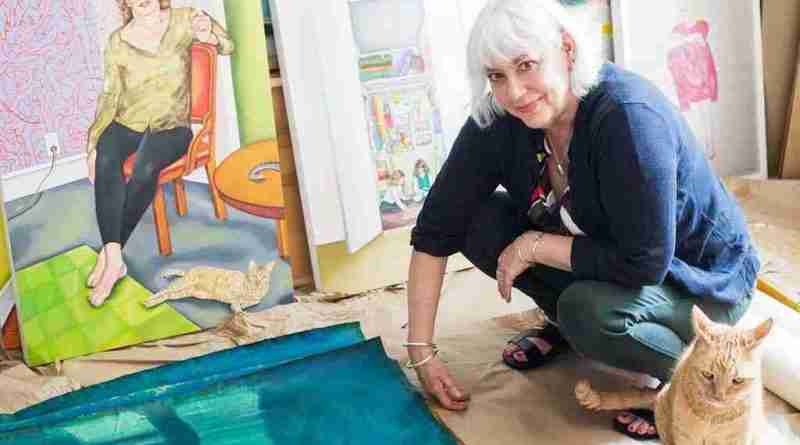 Robin Tewes, Alice Neel of the Guerrilla Girls
Translation of the original Italian article published by Artribune on August 2, 2025 By Antonino La Vela Link to original
Read More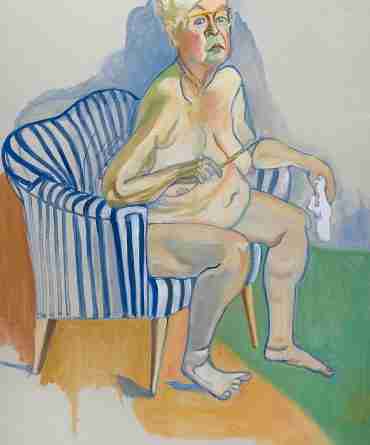 Alice Neel
New York Figurative Expressionism is usually described as the return of the human figure after the triumph of Abstract Expressionism.
Read More American Figurative Expressionism
While mid-century American modernism marched aggressively toward the pure abstraction of the New York School, a stubborn counter-current refused to
Read More