Pepe Espaliú: The Sick Body That Forced Spain to Look at AIDS
Before AIDS entered Spain’s public memory, Pepe Espaliú turned his own body into a demand for care. If you’re new
Read More
This category is a curated hub of essays and case studies on LGBTQ+ art as a system of visibility: who gets to appear, who pays the price of appearing, and how images carry memory across time.
If you are new, begin with the overview and then follow one route as a reading path. This archive is updated as new essays are published.
 Espaliu Pepe Carrying 1992 Madrid
Before AIDS entered Spain’s public memory, Pepe Espaliú turned his own body into a demand for care. If you’re new
Read More Yayoi Kusama
A critical guide to the 15 contemporary art exhibitions worth seeing across Europe in autumn 2026, spanning Venice, Amsterdam, London, Paris, Turin, Madrid, Bilbao and Munich.
Read More Yagwang, Raw Proof, 2024. Courtesy the artists
Yagwang dismantles a Frieze Seoul booth for Facade Zone, a commission backed by Bvlgari. The work exposes hidden labour, unstable bodies and the fair’s talent for turning criticism into cultural capital.
Read More Pepe Espaliú, *Carrying*, Madrid, 1992. In the performance, the Spanish artist was carried through the streets of the city in the arms of others, turning his vulnerable body into an image of care, dependence, and solidarity during the AIDS crisis. Source: "VICE2.
If you’re new to this wider project, start here: LGBTQ+ Art: From Classical to Contemporary. You can also browse the
Read More Frida Kahlo photographed by her father, Guillermo Kahlo.
The Gelman Collection, a disputed export permit and the growing distance between private ownership and cultural memory The Gelman Collection,
Read More Dildos series - Artist credits
From Womanhouse to the Guerrilla Girls, Christina Schlesinger reflects on lesbian visibility, public art, feminism, and the lifelong process of becoming herself.
Read More Cassils, Becoming an Image, 2013. Photo Cassils & Manuel Vason
Between darkness, fire, and “archives” imprinted on the retina, the Canadian artist rethinks the body as a somatic instrument and
Read More
If you’re new to this wider project, start here: LGBTQ+ Art: From Classical to Contemporary. You can also browse the
Read More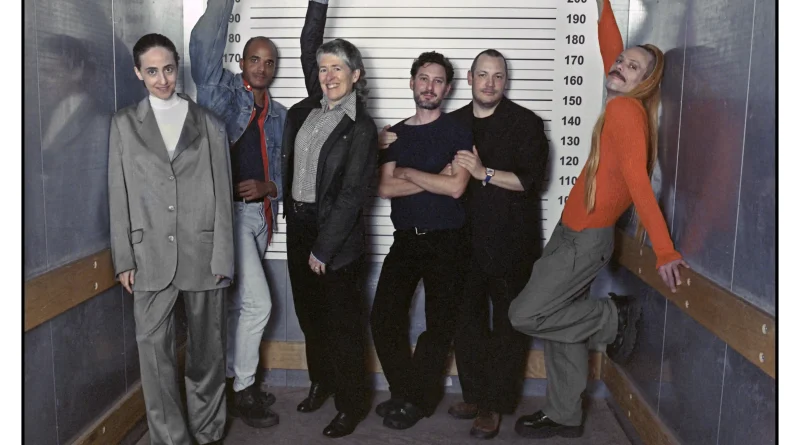 The team of the Swiss Pavilion at the 2026 Biennale. From left to right: Miriam Laura Leonardi, Yul Tomatala, Nina Wakeford, Gianmaria Andreetta, Luca Beeler, Lithic Alliance. Photo: Del LaGrace Volcano.
The Politics of an Open Archive At the 2026 Venice Biennale, The Unfinished Business of Living Together brings together Nina
Read More Catherine Opie (Photo courtesy of the artist)
From London’s National Portrait Gallery to the politics of visibility, the artist reflects on portraiture, queer bodies, family, and what
Read More