Elvira Banotti Was There at the Birth of Italian Feminism. So Why Was She Forgotten?
While Carla Lonzi is being rediscovered, Banotti forces a more uncomfortable question: what happens to the women who helped found
Read More
Italian contemporary art cannot be reduced to a sequence of famous names or a single national style. Its history moves through postwar abstraction, experiments with space and perception, material and conceptual investigations, feminist criticism and renewed approaches to painting. Today, that history continues through individual practices, collective projects and exchanges across borders.
This category brings together writing on Italian artists, movements and exhibitions, alongside conversations about what art can change in public life. The index below distinguishes groups and currents formed in Italy from international practices in which Italian artists also participate.
The periods indicate moments of emergence or particular visibility. They do not mark fixed beginnings and endings. English terms are used where established, while the original names of groups and distinctive Italian critical labels are retained.
For a wider historical framework, explore the Contemporary Art Index and the Major Artists guide.
Select a period to open its list. Links on movement names lead to dedicated tag archives. Additional articles are identified separately as related reading.
After the Second World War, debates over realism, abstraction and political commitment reshaped Italian art. Groups proposed different relationships between the image, its materials and the world beyond the canvas.
Related reading:
Giulio Turcato and Italian postwar abstraction;
Spatialism beyond Lucio Fontana.
Artists questioned the unique expressive gesture, explored collective working methods and tested how images behave through time, light and the viewer’s movement. Other circles responded to photography and the visual language of mass culture.
International context: these experiments intersected with
Kinetic Art and
Op Art.
These links open international archives, rather than collections restricted to Italian artists.
Art expanded through materials, language and actions. Alongside artistic groups, feminist collectives challenged the assumptions governing authorship, cultural authority and women’s place in art history.
Related reading:
Pino Pascali and the encounter with his work;
Mariuccia Secol on feminist art and collective experience.
Painting remained a contested field. The investigation of its procedures coexisted with renewed attention to figures, myth and historical references. Critical labels and shared studios brought different artists into public view.
Related reading:
Transavanguardia: the return to painting as a critical strategy;
Enzo Cucchi.
New critical positions addressed the growing power of media, while collective projects reconsidered materials and the settings in which art could meet its audience. These developments formed part of an increasingly international art world.
Public art, street art, digital media and participatory projects also developed in Italy during these decades. They are discussed below as shared international practices, rather than exclusively Italian movements.
Wider context:
Contemporary art in the 1990s and
contemporary art in the 2000s.
An account of Italian art today needs room for practices that do not belong to a named movement. Participation, memory, material experimentation and the politics of exhibition-making provide several routes through the Journal’s recent coverage.
These are selected encounters, not a complete survey of living Italian artists. They connect the historical index to artworks, exhibitions and conversations taking place now.
Italian artists also work within international movements and debates. The links in this section provide a broader framework: their archives and guides include artists of different nationalities.
A movement can make a historical moment easier to recognise, but it can also conceal differences between artists. Italian art has never spoken with one voice. Its significance lies partly in the disagreements between abstraction and representation, collective ambitions and individual practices, inherited forms and new conditions of making.
That tension continues today. The articles below follow Italian art through works, exhibitions and conversations, asking how its histories remain active and what its contemporary practices make possible.
This is a selective, expanding index. Names without links are retained for historical orientation where a dedicated archive or sufficiently relevant article has not been identified. International resources are labelled as context; they should not be read as archives of exclusively Italian art.

While Carla Lonzi is being rediscovered, Banotti forces a more uncomfortable question: what happens to the women who helped found
Read More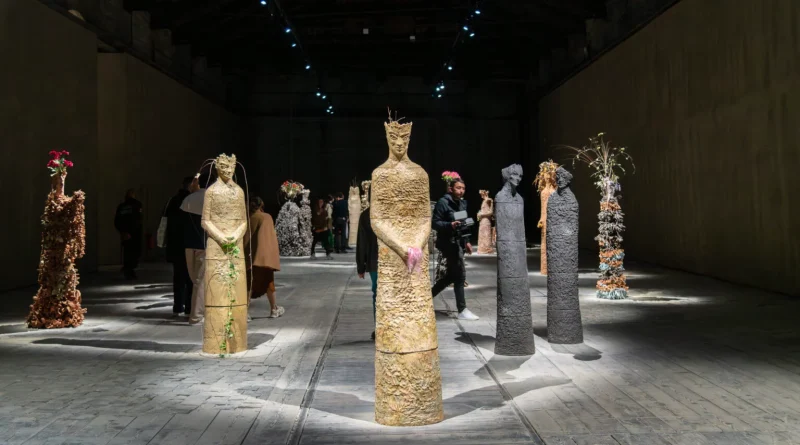 Biennale 2026, Italy Pavilion. Photo: Irene Fanizza
At the Venice Biennale 2026, Chiara Camoni’s Con te con tutto does not simply bring clay, plants, ritual, memory and
Read More Cittadellarte, Biella, Italy. Photo by Pierluigi Di Pietro.
Why the Third Paradise still matters today, but not only as a symbol Before he entered the room Read the
Read More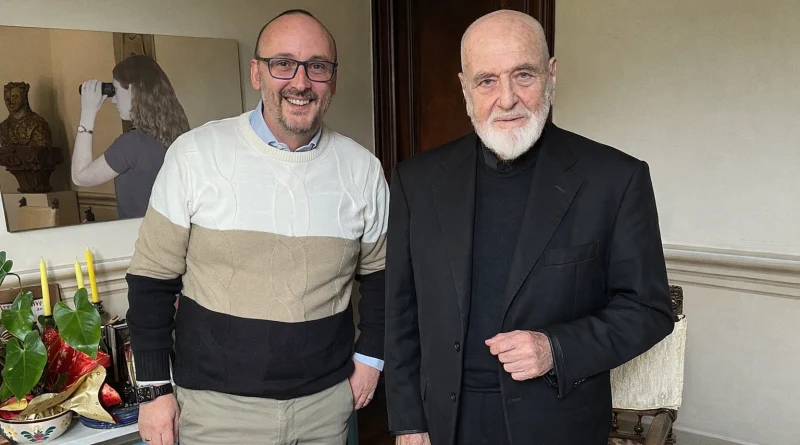 Michelangelo Pistoletto with Antonino La Vela, with a mirror painting in the background.
On the day of his 93rd birthday, Michelangelo Pistoletto speaks about truth, ego, the Third Paradise and demopraxy, reminding us
Read More Carla Accardi - Assedio rosso n. 3 1956
Feminist Art in Italy: Carla Lonzi, Carla Accardi, Elvira Banotti, and a New Politics of Subjectivity Feminism in Italian art
Read More The Glorious Mothers
A collective born in Italy during the pandemic, facing the challenge of being both artists and mothers between creative practice,
Read More Salvador Mundi
How a lost Leonardo, a predator’s emails, and a Florida mansion redraw the map of power in the art world
Read More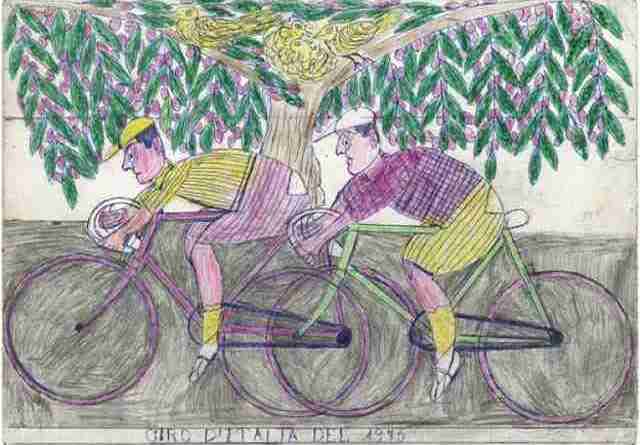
How a Sicilian Mason Turned Artist Transformed Adversity into Timeless Expression In the vibrant yet shadowed corridors of the art
Read More Giuseppe Penone — Tree of 12 Metres
“`html A Place to Contemplate the Infinite If I could lose myself anywhere, it would be within Giuseppe Penone’s enchanted
Read More Paratissima Logo
The Art Heist at Paratissima: A Celebration Overshadowed This year’s Paratissima in Turin was supposed to be a celebration of
Read More