
Ansel Elgort Wore a Yukata to a Frieze Seoul Party. The Problem Was Not the Dress Code
One Guest, One Garment and the Wrong Cultural Context
At a night designed to introduce international guests to Korean culture, Ansel Elgort arrived wearing a Japanese yukata. The mistake was not simply sartorial. It exposed how easily global cultural events can celebrate local identity while allowing their most privileged visitors to treat it as interchangeable scenery.
The Night a Yukata Became the Story
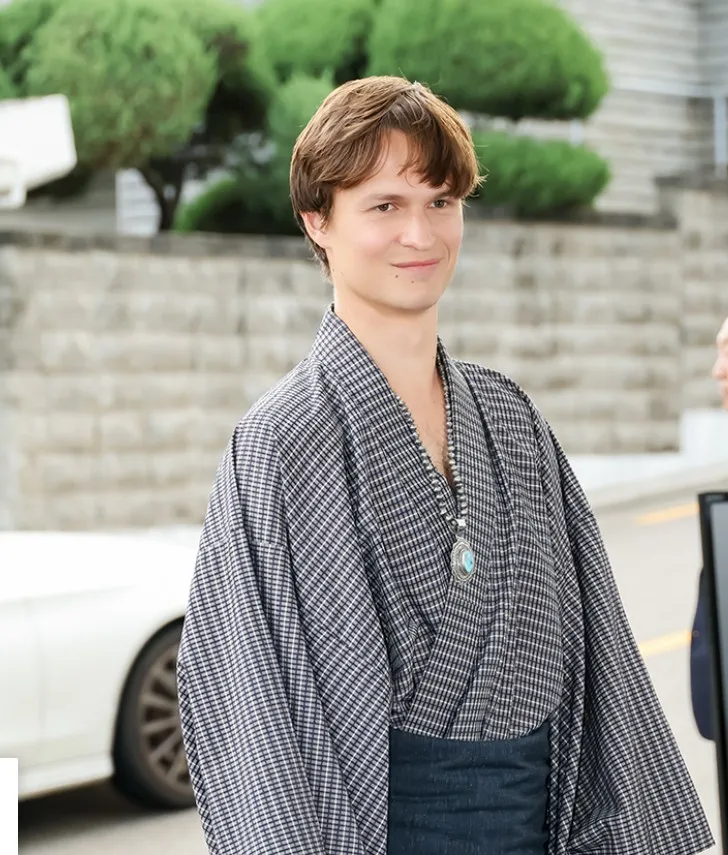
Hollywood actor Ansel Elgort arrived at the “CJ Night in Celebration of Frieze Seoul” wearing a Japanese yukata. The event, held on 2 September at the Leeum Museum of Art, had been organised to celebrate the opening of Frieze Seoul 2026 and introduce international guests to Korean culture and lifestyle. The announced dress code was cocktail attire.
Elgort therefore managed to ignore the dress code, misunderstand the context and become one of the most discussed figures of Seoul Art Week without exhibiting a single work.
The reaction in South Korea was immediate. Social media users questioned why an American actor would wear Japanese traditional clothing to an event explicitly dedicated to Korean culture. Seo Kyoung-duk, a professor at Sungshin Women’s University known for his campaigns on Korean cultural and historical issues, described the choice as “very rude” and questioned Elgort’s judgment as a global celebrity.
The incident was reported by Yonhap News Agency. The Korea JoongAng Daily also noted that the evening was intended specifically to showcase Korean culture to domestic and international guests.
It would be easy to treat the episode as celebrity gossip or another brief controversy manufactured by social media. Yet the location matters, the history matters and, above all, the cultural structure surrounding the event matters.

A Yukata Is Not Just a Generic Asian Garment
There is nothing inherently offensive about wearing a yukata outside Japan. Cultural exchange does not require traditions to remain sealed within national borders, and clothing cannot automatically be reduced to a political declaration. The problem was not simply that Elgort wore Japanese clothing. It was that he wore it in Seoul, at an event intended to celebrate Korean culture, while apparently failing to recognise any meaningful difference between the two contexts.
That difference is not decorative. Korea was under Japanese colonial rule from 1910 to 1945, a period marked by political repression, forced cultural assimilation, economic exploitation and attempts to suppress Korean language and identity. Relations between the two countries are still affected by unresolved disputes concerning colonial violence, forced labour and historical responsibility.
None of this means that a yukata becomes forbidden in Korea. Nor does it mean that every cultural mistake must be transformed into a geopolitical crisis. It means that context cannot be dismissed as an inconvenience. Wearing Japanese traditional clothing at a Korean cultural event, while also disregarding the requested dress code, suggests something more revealing than deliberate provocation: the confidence of someone who does not believe he needs to understand where he is.
Ignorance can also be a form of privilege.
When Seoul Becomes an Interchangeable Background
Frieze Seoul presents itself as an international fair rooted in the depth and specificity of the Korean art scene. Its success depends partly on this promise. Collectors, celebrities, galleries and luxury brands do not travel to Seoul merely to enter another exhibition hall. They come because the city offers a cultural identity that London, Los Angeles and New York cannot reproduce.
But globalisation often works through a contradiction. It celebrates local difference while making places increasingly interchangeable for those with enough money and visibility to move between them. Seoul becomes a destination, an image and a schedule of dinners, parties and VIP previews. Culture is consumed rapidly, photographed and converted into social currency.
Within that system, the difference between Korean and Japanese traditional clothing may appear secondary. Both can be absorbed into a vague Western fantasy of Asia, selected for their visual effect rather than understood through their historical meaning. The garment becomes costume and the country becomes scenery.
Elgort’s yukata exposed this mechanism with remarkable efficiency. The incident was not produced by Frieze itself, and it would be unfair to hold an art fair directly responsible for every decision made by one of its celebrity guests. Nevertheless, it occurred inside the ecosystem surrounding the fair: a network of museums, corporate sponsors, luxury hospitality, cultural branding and highly visible personalities.
The question is therefore larger than what one actor decided to wear. It concerns what happens when international cultural events claim to celebrate a place while allowing their most privileged visitors to experience it only as a background.
Who Is Expected to Understand Whom?
International art events continually ask local institutions, workers and audiences to accommodate the habits of global visitors. English becomes the default language. Programmes are redesigned for international collectors. Cities reorganise their cultural calendars around the arrival of fairs, galleries and sponsors.
The reverse expectation is often considerably weaker. A famous guest can arrive without understanding the historical relationship between neighbouring countries, misunderstand the purpose of an event and still occupy the centre of its media attention. The local audience, meanwhile, is expected to explain patiently why the mistake matters.
This imbalance is rarely described as colonial because it no longer arrives through armies or governments. It appears through access, prestige and the assumption that cultural preparation is optional for the globally famous.
This is also why the incident belongs within a discussion about contemporary art. The art world speaks constantly about identity, decolonisation, cultural memory and situated knowledge. These concepts fill exhibitions, curatorial statements and institutional programmes. Yet they can disappear remarkably quickly at the entrance to a VIP party.
The contradiction is almost too precise. Inside the fair, cultural identity is discussed, represented and sold. Outside it, a celebrity treats two Asian cultures as though they were visually interchangeable.
Frieze Seoul’s Most Revealing Unintended Performance
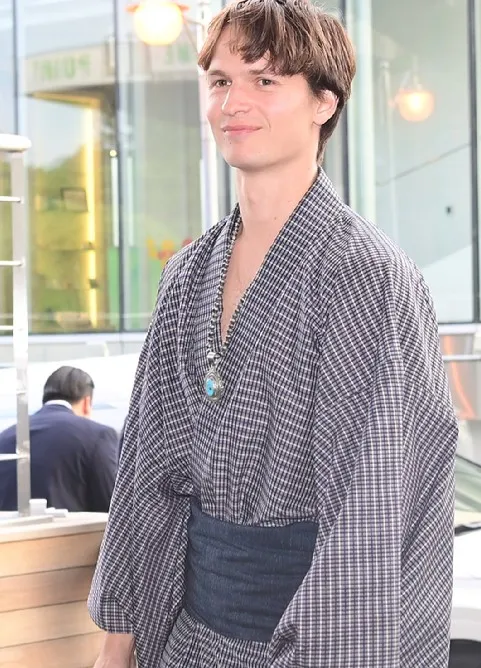
Elgort did not present the gesture as an artwork, and it should not be dignified retroactively as one. Nevertheless, it functioned like an unintended performance. A famous Western visitor entered a space dedicated to Korean cultural visibility wearing the traditional clothing of Korea’s former colonial ruler. The discomfort that followed made visible a hierarchy that the polished language of cultural exchange usually conceals.
The incident does not require outrage for outrage’s sake. Nor does it justify treating every use of another culture’s clothing as cultural appropriation. The more useful response is to ask what international cultural participation demands beyond physical presence. Perhaps the minimum requirement is attention.
If global art events genuinely want to celebrate local cultures, their international guests cannot behave as though location were merely a backdrop. Cultural exchange begins with curiosity, but it also requires the modest recognition that entering another context does not automatically make it yours.
Elgort’s mistake was not simply wearing a yukata. It was apparently believing that where he wore it made no difference. At Frieze Seoul, difference was supposed to be the entire point.


