Blending Worlds: Medialism and the Fusion of Traditional and Digital Art Forms
Medialism: When Traditional Media Meets Digital Innovation
Hybrid media art and new media installations: how artists blend sculpture, video, interactivity, and digital culture from Nam June Paik to Rafael Lozano-Hemmer.
Medialism is a still-evolving label for artworks that fuse traditional media—painting, sculpture, physical installation—with digital tools such as video, projection, sensors, software-based imaging, and interactive systems. The point is not “tech for tech’s sake,” but a hybrid language where the physical object and the digital layer co-produce meaning.
What Medialism looks like in practice
Tony Oursler is often cited as a reference point for this hybrid logic: projected faces and moving images inhabit three-dimensional forms, turning sculpture into a psychological screen. The result is neither pure video nor pure object, but a third thing—an encounter where the viewer reads emotion, presence, and distortion at the same time.
Nam June Paik, widely recognized as a foundational figure in video art, also prefigured a medialist mindset: he treated electronic media as a cultural material to be sculpted, bent, and recontextualized. In Paik’s universe, the screen is not a neutral window—it is a body that can be composed, stacked, interrupted, and made physical.
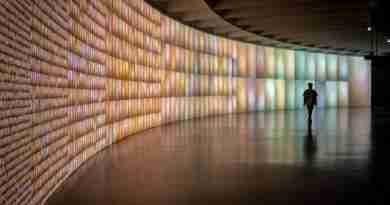
Pipilotti Rist expands this fusion into immersive environments: video becomes atmospheric, architectural, almost tactile. Instead of looking at an image, you enter it—color, sound, scale, and bodily perception do the work together.
Interactivity and the viewer as a medium
A decisive step in medialist approaches is interactivity: the audience is no longer a passive receiver, but an active component that completes the work. Rafael Lozano-Hemmer’s installations are emblematic here, where biometric data, movement, and participation translate into light, rhythm, and collective experience.
In this framework, art becomes a responsive system. The artwork behaves differently depending on who is present, how they move, what they contribute. That shift quietly challenges old ideas of authorship and authenticity, because the “final form” is never fully fixed.
Digital culture as subject, not just a tool
Medialism also functions as a critique of digital life. Artists who explore software aesthetics, glitches, platform logic, and the visual grammar of screens turn digital culture into content. The medium is the message again—but updated for a world shaped by networks, algorithms, and interfaces.
As the boundary between physical and digital continues to dissolve, medialist practices offer a clear question: how do technology and embodiment co-shape perception? And what new forms of attention does contemporary art ask from us when images become environments?